August 2026 Torch 20th Anniversary Special Feature: Patricia Smith & Lynne Thompson
In this special joint feature, literary powerhouses and best friends Lynne Thompson and Patricia Smith talk about sisterhood.
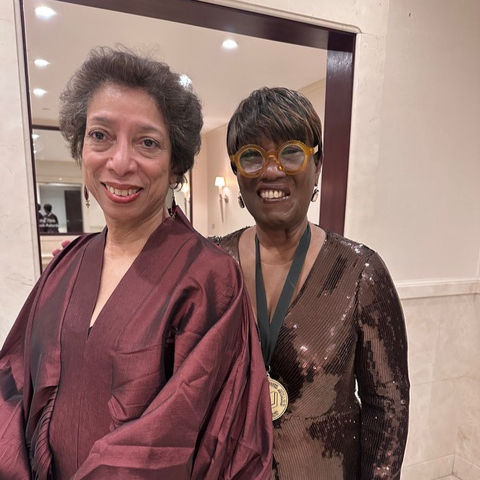
Lynne Thompson served as Los Angeles’ 4th Poet Laureate and is the author of four collections of poetry: Beg No Pardon; Start With A Small Guitar; Fretwork; and, Blue on a Blue Palette. A lawyer by training, Thompson serves on the Boards of The Poetry Foundation, Los Angeles Review of Books, her alma mater, Scripps College, and is the current President of Cave Canem. In addition to featuring for Torch Magazine, Thompson’s work appears or is forthcoming in Best American Poetry, Kenyon Review, The Common, Tiferet, and the Georgia Review. Her website is www.lynnethompson.us.
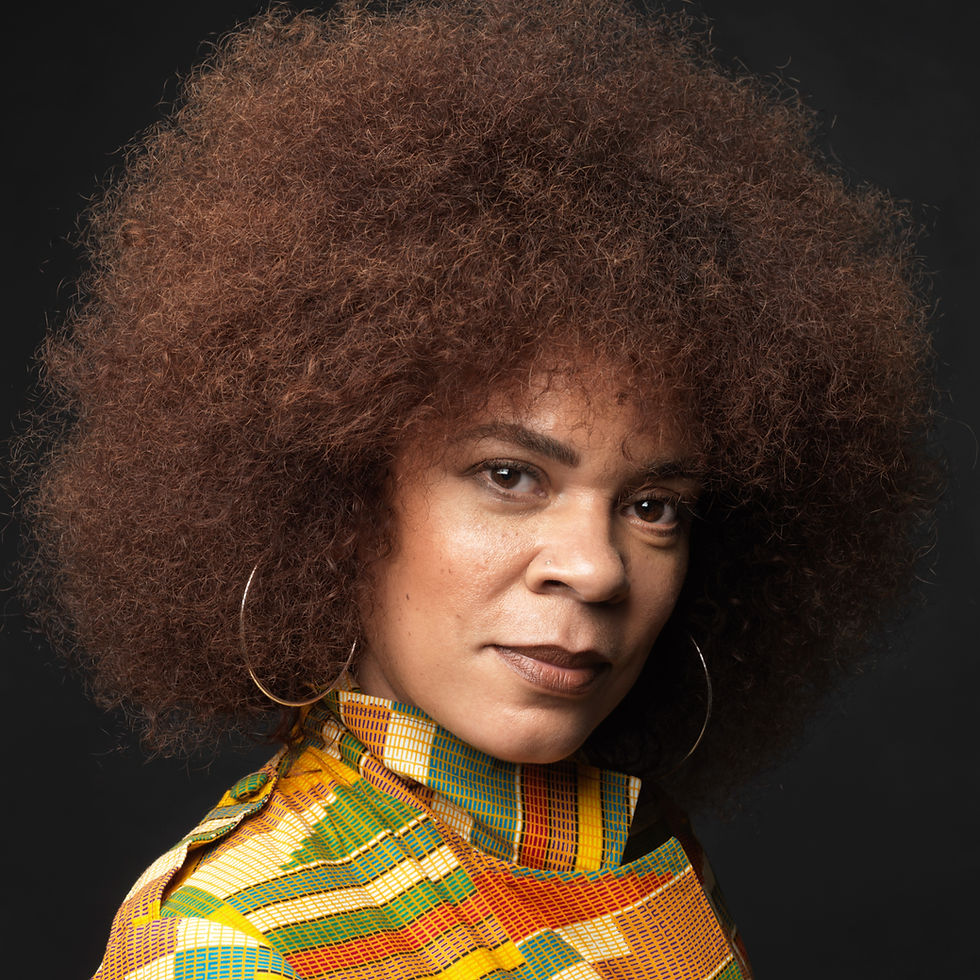
Patricia Smith is the author of ten books of poetry, including The Intentions of Thunder: New and Selected Poems (Scribner 2025), winner of the 2025 National Book Award for Poetry, finalist for the 2026 Pulitzer Prize, and winner of the 2026 NAACP Image Award for Poetry; Unshuttered; Incendiary Art, winner of the 2018 Kingsley Tufts Poetry Award, the 2017 Los Angeles Times Book Prize and the 2018 NAACP Image Award, and finalist for the2018 Pulitzer Prize; Shoulda Been Jimi Savannah, winner of the Lenore Marshall Prize from the Academy of American Poets; Blood Dazzler, a National Book Award finalist; and Gotta Go, Gotta Flow, a collaboration with award-winning Chicago photographer Michael Abramson. Her other books include the poetry volumes Teahouse of the Almighty, Close to Death, Big Towns Big Talk, Life According to Motown; the children's book Janna and the Kings and the history Africans in America, a companion book to the award-winning PBS series.
The Flower & The Navel-Gazer
by Lynne Thompson
After a clink of champagne flutes filled
with the eponymous liquor laced with
creme de violette, one poet introduces
herself as Anemone, says—coyly— to be
specific, I am Anemone Thomsonii, come
from Mt. Kilimanjaro, East Africa, daughter
of the wind, tears of Aphrodite following
Adonis’ death. Her fellow scribe, her lips
moist with the sparkle and tickle, replies
they call me Omphaloskepsis, Navel-gazer.
Look to the monks of Mount Anthos or those
who practice kundalini yoga—they will instruct
you to find the soft center of your heart where
your bountiful powers reside, the place you will
find unending joy. And in this way, they spoke into
that first evening’s hollow and until their souls—
flower and navel-gazer—found their own harmony;
became musky essence and light-gathering seer.
A Talented Felon, Branzino and the Green Dress
by Patricia Smith
Who knew that there was joy in just
comparing liver spots, reluctant squeaks
the body makes, or warbling ancient tunes
that everyone’s forgotten? Girl, who knew
that poetry would hold us close this long,
through deaths of mothers, menopause, the loss
of men we swore we’d kill for once upon
a time? Who knew we’d wind up here,
content to write our long and jumbled lives
in rhyme, to throw our heads way back and laugh
at just how silly it’s all been, and look—
the world is perfect from this perch, where we’ve
seen everything and nothing, where we’ll die
content in sisterhood. We lived so loud.
THE INTERVIEW
This interview was conducted separately between Lynne Thompson, Patricia Smith, and Jae Nichelle on April 17 and June 25th, 2026.
What a joy to have you both in conversation here! I’d love to take it back to the start. From both of your perspectives, how did your friendship begin? When did you know it was going to be a key relationship in your life?
LT: Although we had met sometime before, I think it was about 2011 or 2012 when Patricia was in Los Angeles and desperate for a friendly face that she called me to “rescue” her. I went to meet her in Santa Monica and we lingered over a great champagne brunch (one of our favorite things to share) for several hours talking about everything from family to what we were writing before she had to catch a plane…and the rest?…you know…..
PS: I think we were aware of each other on the margins—I realize now that Lynne was breaking her way into the poetry community and wasn’t yet her currently feisty self. But she was the only person I knew who lives in the glitzy wilds of Los Angeles, and when I got stuck here—in some insane mansion in the Hollywood Hills where there were live fish in the chandelier—I sent out an SOS for rescue. She declined my late-night plea, but later we couldn’t stop laughing. I’d found a soulmate.
Older women (I don’t like that phrase)—let’s call us “queens”—have a very particular sense of humor, a shared love of real music, a bemused outlook on “the same old thing,” and the toughness that only experience can bring. I’ve been lucky to find a gal to grow up with. We’ve transcended words—a look, or a quick gesture, can say everything.
I enjoyed listening to a conversation you both had with The Hive Poetry Collective, where Patricia says, “I might feel differently about my career right now if it wasn’t for Lynne. I think I’d feel more isolated.” What has your friendship taught you about being a writer?
LT: Having a “bestie” who is also a writer, particularly a poet, and most particularly, who is the Patricia Smith, means that you can discuss the strengths or weaknesses of a particular line, how it should be broken, it’s music or lack of it, whether it needs to be put in a drawer or how and who to approach for publication, etc. and you can also talk about what it means to be a Black women poet in today’s America, movies, gossip (literary and otherwise) or whether that dress you want to buy is flattering…or not so much…..
PS: It’s funny, because we don’t write together. We don’t even look at each other’s work much. But as I’ve grown older, my concerns have changed, my voice has changed, the things I think are worth writing about have changed. And it’s invaluable to have someone see you through those changes as she’s going through them herself. Lynne’s only a little more than four years older than I am, but she’s a bona fide beacon. She’s tireless (I can hear her laughing), and spirited and sharp—at a time when society expects us to “slow down.” She’s the reason I don’t tumble into ruts. She’s the reason I never stop looking for new ways to surprise myself. She’s the reason I’m not slowing down.
You’ve both been featured in Torch Magazine previously—Patricia’s first feature being in 2007 and Lynne’s in 2024. As celebrated members of this community, what does “literary sisterhood” mean to you within the larger world of Black women writers? What do Black women writers need to hear or consider?
LT: I’ve recently been reading The Sisterhood by Courtney Thorsson about a group of black women writers in the 1970s who, as the cover proclaims, “changed American culture.” Toni Morrison, June Jordan, Ntozake Shange, and others combined their knowledge, their resources, and their respect for each other to produce some of the most important work in American literature. Although difficult to maintain for a variety of reasons, I think Black women writers are no less in need of a sorority like that—or at least considering that model—whether it be only 2 people or a larger group. The support and honesty are invaluable in ways that may seem invisible to others but create an advantageous environment for its members.
PS: Wow. I’m pretty sure I would have answered this differently back in 2007. Literary sisterhood could be defined as women supporting each other in their writing. Now it’s women who support each other in their lives. The writing isn’t all there is. Literary sisterhood means holding on to each other—supporting self-care, forging paths through grief and loss, comforting during illness. Each sister needs to be the best she can be so the writing has a clear path forward. A good sister will see to that. Black women need to hear that everyone wants to be us. They’ve worked diligently at convincing us that we are what is wrong in this world. It’s so empowering not to listen.
What’s an early example of Black sisterhood (in life or media) that impacted you?
LT: Waiting to Exhale, four women with different styles and approaches to their lives, who supported each other even when they disagreed.
PS: Back in 1977, a spectacular group of Black women gathered in June Jordan’s apartment. Toni Morrison. Alice Walker. Ntozake Shange. They gobbled gumbo, guzzled champagne, and proceeded to change the lives of every Black woman writer who came after. “The Sisterhood” later opened its arms to others, including Audre Lorde, Margo Jefferson, Paule Marshall, and met every month for two years—can you imagine? They talked craft and revolution and Black love. They surveyed the literary landscape that sought to erase them. And they laughed and leaned on one another.
Do you see echoes of each other’s language, rhythms, or obsessions in your writing after years of knowing one another? How do you feel about that kind of creative influence?
PS: I don’t think so. Part of what makes us friends is how absolutely different we are. On the other hand, some influences are hard to see if you’re the one exerting the influence or the one being influenced. I think someone outside of the two of us would be a better judge of that. I’m not sure we’d be able to see it.
LT: I think at a very base level, we’re both committed—in different ways—to the narrative and love pursuing the myriad ways to put it on the page. Moreover, we’re both obsessive about “the best words in the best order,” but what influences me most about Patricia’s writing is her work ethic and commitment. When she’s in “the zone,” don’t call her—not even when that dress you’ve both been drooling over goes on sale. The good news is she’ll call you back when she’s done and say “buy it—immediately!”
You are both incredible at using and subverting new and classic forms, and you both often talk about your willingness to try new things on the page. What new things are calling you these days? What are you playing with?
LT: Largely influenced by Patricia, I’m playing (as I have been for quite a while) with the crown sonnet… its possibilities are breathtaking, and I hope to conquer my anxiety about it in the new manuscript I’m contemplating.
PS: No matter what Lynne says, I CANNOT craft her concoction ‘the centorina” (I think that’s it), where she combines the sestina and cento. It is utterly impossible. I’ve also decided, just last night, in fact—to create my own form. I’m currently checking to see if it’s already been done before I tell Lynnie about it. I’m also about to dive into a memoir, and I fully intend for it to be hybrid and surprised in both form and content. We’ll see how that works.
The last thing you ate is the name of a new poetic form. What is it?
LT: Black beans.
PS: CAVA!
What’s a memory you have together that you laugh about to this day?
LT: Patricia was a featured speaker at a conference in Chicago, and I was in Chicago at the same time….we were staying in a fabulous hotel that had a “private room” above the lobby that served wine and other beverages and small bites, and we loved being in there, mostly by ourselves, and people-watching from a perch where no one could see us!
PS: SO MANY. I wonder how many I can reveal publicly. One of the funniest ones involves a car, a mother, and prison. And no, neither of our mothers has been to prison.
Lynne, what do you wish more people knew about Patricia? Patricia, what do you wish more people knew about Lynne?
PS: I wish more people knew how hard Lynne works at her craft. She’s constantly reading, studying, reaching—and just when you think she can’t get any better, she does. She refuses to sit still, creatively and otherwise. I also wish more people knew that, as a former lawyer, Lynne can be delightfully insufferable. For instance, while we were in Las Vegas for her birthday, we went to a show by the magician David Blaine, who performed a trick that was absolutely impossible. Instead of enjoying the trick for what it was, Lynne will NOT REST until she figures out how he did it. Which she never will.
LT: Most people who know Patricia know about her generosity, but I’d like them to also recognize her thoughtfulness, which is something a little different. If she has you in her sights—whether for a birthday or a literary recommendation or anything else—she carefully considers the best way to achieve a goal in a way the recipient will forever treasure.
What’s your favorite poem of each other’s?
LT: You ask the impossible! Have you read Patricia Smith!!!?!? Ok, today I’ll say "To Little Black Girls, Risking Flower."
PS: Umm…this should be interesting. My favorite of Lynne’s is “How I Learned Where We Come From,” from—I think—Beg No Pardon. I love it best when Lynne writes about home, her people, and I can feel how firmly she’s rooted in her beginnings. The poem just lifts me up and puts me down right in the center of it, with that call and response singing in the air. I don’t think she knows how much I love it.
How can people support you right now?
LT: Of course, if people read my work, I am forever grateful. But even more important, if they would add poetry to their reading regimen, particularly the poetry of Black women, their reading would “lift all boats!”
PS: CASH MONEY. We LOVE to travel. That’s what’s so good about being queens (remember, that’s my term for “elders”)—we can afford to be fascinated by anywhere, and (usually) we can afford to get there, to laugh and luxuriate and revel in everything we’ve learned. Just recently said “Costa Rica?” and Lynne said “Yep!” WE COULD USE BENEFACTORS.
Seriously, just keep reading what we write and keep challenging us to do better. Expect something new every time you see us.
Besides each other, name another Black woman writer people should know.
LT: Taylor Byas….her newest poetry collection Resting Bitch Face is a must-read.
PS: Aris Kian. I’m the editor of the Miller Williams Series at the University of Arkansas, and I just chose her phenomenal book, Heartless Architecture, for publication next year. It amazes me when a stellar poet emerges, then you find out that they’ve been doing the good stuff for a while and you just weren’t seeing. She’s a Houston Poet Laureate emeritus, and writes with an unflagging love about her hometown and the roots of our folk in the American South.
###
Torch Literary Arts is a 501(c)3 nonprofit established to publish and promote creative writing by Black women. We publish contemporary writing by experienced and emerging writers alike. Programs include the Wildfire Reading Series, writing workshops, and retreats. Click here to support Torch Literary Arts.