October 2026 Feature: Elizabeth Alexander
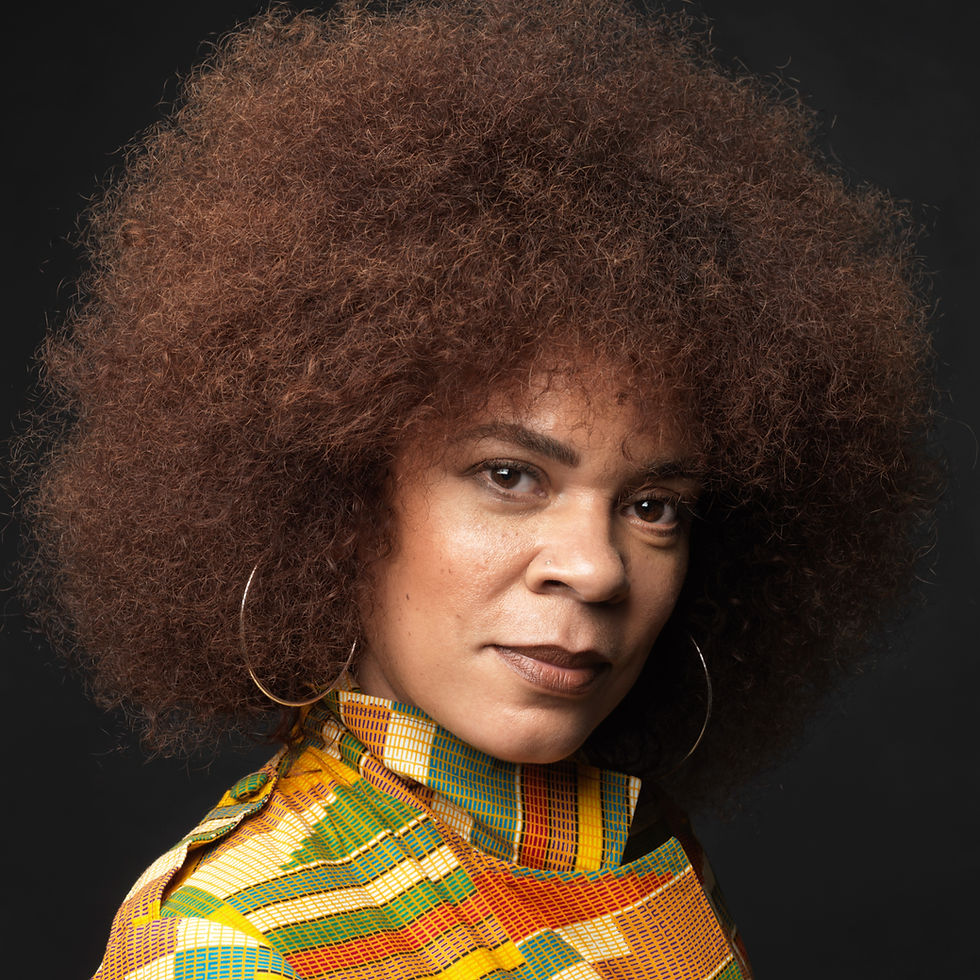
Elizabeth Alexander is the author of multiple award-winning books, including The Trayvon Generation, American Sublime, and The Light of the World. She has been awarded the Jackson Poetry Prize, the John Simon Guggenheim Memorial Foundation Fellowship, the George Kent Award, the National Endowment for the Arts Fellowship, and three Pushcart Prizes for Poetry.

Elizabeth Alexander is a prize-winning and New York Times best-selling author, renowned poet, educator, scholar, and cultural advocate. Her memoir, The Light of the World, was a finalist for the Pulitzer Prize and National Book Critics Circle Award. She composed and recited "Praise Song for the Day" for President Barack Obama’s 2009 inauguration and is currently president of the Mellon Foundation, the nation’s largest funder of the arts, culture, and humanities. She lives and works in New York City.
Conduct Your Blooming
In the children's book Frederick by Leo Lionni, the eponymous hero—a mouse who turns out to be a poet—gathers stories while his mouse companions harvest corn in the warm months for the coming season. In this fable, when winter comes and it is cold and gray and the harvested food is scarce, it is Frederick who brings the community through with stories, invocation of the warmth and color of spring and summer that would shine the spirit light to sustain and move them through the long, dark days.
Frederick was published in 1967 in a time when the country was riven with civil rights struggles, the seemingly intractable war in Vietnam, and a vertiginously evolving society. Looking back, I think that Lionni was asking in a very specific time, why do we need art? What counts as good and helpful work? What is the role of the artist in community? What does the artist have to offer that is not of clear material value?
“I am gathering words,” Frederick says to his community, “[f]or the winter days are long and many, and we’ll run out of things to say.”
The mice ask, Frederick, why don’t you work? and he replies, “I do work. I gather sun rays for the cold dark winter days . . . I gather colors, for winter is gray.” He asks them to close their eyes, “And when he told them of the blue periwinkles, the red poppies in the yellow wheat, and the green leaves of the berry bush, they saw the colors as clearly as if they had been painted in their minds.”
As Frederick speaks of the sun, it begins to actually feel warmer. And the fellow mice, marveling at the magic of his words, call him “poet.” The community needed what Frederick brought, even if it might have seemed abstract and unpractical.
I am a poet, having lived my life by and through the word. To me, being a poet not only means making poems. It also means being attuned and reverent to the power of distilled, precise words in the form of poems but also as carriers of souls. Here is my essential self in these words, bone true.
Being a poet means I believe in patterns, in serendipity. I follow the logic of Muriel Rukeyser when she says, describing islands, “O for God’s sake / they are connected / underneath.” Galway Kinnell said being a poet means you should be able to talk about anything, and that is what I hope. “Nothing human is alien to me,” wrote the once-enslaved Roman playwright Terence.
Many things are true at once in good poems, and that is how I experience life itself. Contradictions coexist in poems, even as form is resolved and made felicitous. When we are in the presence of art we are multidimensional and enlarged. Being a poet has brought me the rewards of travelling the world with my wares in hand and connecting deeply with other human beings in the process. Being a poet has taught me—and so I remind others—that we make com-munity through our words, and through listening. How can we move in the world building communities and making resilient and true human connections?
The world is spinning and turning, and I continue to believe that precision with the word is spirit work that will help us through the whirlwind. The late 1960s are an interesting point of comparison to today, another time when the country was wracked by internal conflicts and questions that foregrounded how we might respond to what Gwendolyn Brooks—my guiding-light poet, bard of Chicago’s South Side, twentieth-century American genius—called “the whirlwind” in her poem “The Second Sermon on the Warpland,” published, like Frederick, in 1967. This is a section:
The time
cracks into furious flower. Lifts its face
all unashamed. And sways in wicked grace.
. . . .
A garbageman is dignified
as any diplomat.
Big Bessie’s feet hurt like nobody’s business,
but she stands—bigly—under the unruly scrutiny, stands
in the wild weed.
In the wild weed
she is a citizen,
and is a moment of highest quality; admirable.
It is lonesome, yes. For we are the last of the loud.
Nevertheless, live.
Conduct your blooming in the noise and whip of the whirlwind.
“Conduct your blooming in the noise and whip of the whirlwind” is a mantra for me. Our world is filled with beauty and possibility but also with violence, condoned hatred, and injustice. Who is going to win this battle? I choose and believe in light and love. But it is not enough just to hope for it. It is not enough to wish for justice. It is not enough to hope that people will do right. If we value it, we must stand for it, and fight for it. That can look many different ways but what if we all described ourselves as justice warriors, each in her own way? What if—as countless people do—we consciously measured our actions large and small by the questions, Is this generous? Is this fair? Is this just? Is this kind?
An earlier section of the poem seems to speak to today:
All about are the cold places,
all about are the pushmen and jeopardy, theft—
all about are the stormers and scramblers but
what must our Season be, which starts from Fear?
Live and go out.
Define and
medicate the whirlwind.
Brooks’s verbs are quirky. Our actions “medicate” (To cure? To narcotize?) the whirlwind, improve the health of the infirmities of the polis, if we follow Brooks’s exhortation. “Conduct”: an organized and mindful action, a way a group is brought into harmony. Another side of the word, conduct, and behavior that is structured and hopefully admirable. “Your blooming”: The word itself opens up and expands possibility. When you say “blooming” your mouth rounds and prepares for song, for elevated words. “In the noise”: Undifferentiated sound that is not symphonic, sound that covers other sounds, the sounds you need to listen to for pleasure or instruction. “And whip”: The whip of the wind, sharp and punishing, the historical shadow of flagellation, violence that specific, which needs to be not only withstood but countered. “The whirlwind”: That word is written by a midwestern poet of the prairies, who understands the power of that lifting vortex. She knows it is a word of great consequence and force that we encounter many times in the Bible. We can stand in it, but how can we withstand it? And we cannot, to use her word, “straddle the whirlwind.”
The poet, writer, teacher, and activist June Jordan, who lived from 1936 to 2002, is another of my touchstones of the same era. Jordan published more critical prose than any other African American woman writer in the twentieth century, as well as plays, anthologies, children’s books, and the tough-minded memoir Soldier. She did much of her work later in her life in the Bay Area, with her Poetry for the People workshop that opened the walls of the university to people in the Bay Area interested in the liberatory possibilities of poetry.
Jordan was fundamentally a fighter, a comrade, a stand-up-and-be-counted kind of woman. And yet so many of her poems are love poems of the tenderest variety, as well as poems of exaltation. In her epistemology, love exists on the same force field as struggle. In political contexts, she would ask these crucial questions: Where is the love? Do you know what you are fighting for as well as what you are fighting against? She wrote, “I am saying that the ultimate connection cannot be the enemy. The ultimate connection must be the need that we find between us. It is not only who you are, in other words, but what we can do for each other that will determine the connection.” It was love, in her unsentimental vision, that could blaze a path through a world in which violence is a commonplace. It is not paradoxical that love should inform and guide our struggles and battles. She said we must remember, it is not just what we are fighting against. It is what we are saying yes to. Where is the love, she asked, that informs our political struggle? Without love, we are just fighting.
These are some of the questions a poet asks. Poets—if we live up to our calling—are guided by a strange courage that takes us into thickets of self and society without fully knowing the answers, to bring into form what we see and seek to understand. We offer what we find to community, for the poem does not live until it has been set forth to be taken in by others.
As Brooks says, you cannot straddle the whirlwind. We are in it, you are in it.
How will you stand and withstand when you face injustice, her poem asks. How do you open the door and build communities? Why have you been placed where you are, at this moment in time? How do we find real courage when we are uncertain or afraid? How can artists help us ask these questions?
How will you stand and withstand the whirlwind?
Excerpted from Signals Across Vast Distances: Essays and Tales. Copyright (c) 2026 by Elizabeth Alexander. With permission of the publisher, W. W. Norton & Company, Inc. All rights reserved.
THE INTERVIEW
This interview was conducted between Elizabeth Alexander and Jae Nichelle on September 9, 2026.
Signals Across Vast Distances is gorgeous. I especially love how you pair your essays with artwork by various artists, including your late husband, Ficre Ghebreyesus. I would love to hear more about your process for selecting those specific pieces. Are there any works you came across that didn’t make the book but continue to stick with you?
The art is a late-breaking entry into the process of writing this book. For every one of my books, I carefully chose a cover by an African American artist, and made sure they were reproduced really well. I think that's the respect that books need to give to art.
At the end of the writing part of things, I sensed that I wanted to have a conversation with artwork. I live in the midst of art and artists. It has been a part of my seeing and thinking and feeling and teaching and knowing for a very long time.
And it's already a multi-genre book. It ends with a to-do list that is meant for you to keep going with your own to-do list. There is memoir and personal essay; there are essays that are in sections, and there is literary analysis. There are all kinds of different modes in this book, so I felt that having art as literally a part of the text, not illustrative of each essay or tale, but rather as an opening, as something that belonged with—but maybe sometimes in a little bit of an oblique way—would make the experience of encounter much richer. That you might stop on a work of art and just think and feel, and then move into the words.
There were many works that I could not include. The outtakes were agonizing! There's just so much extraordinary work by various artists, Black and Latinx artists here, that live in me. I also give great gratitude to Norton, my publisher, because including artwork added time and resources to the making of the book, but they never hesitated. They understood why it was important as soon as I introduced the idea.
I just finished reading Ntozake Shange’s Ridin’ The Moon in Texas and was thinking how much we could use more books that include prints of art and writing in conversation with or around it.
Shange's work has been very important to me in so much of what I've done. I wrote a play called Diva Studies, in which I was really seeing what she did with verse form and poetry on the stage. I learned so much about that from her writing and the way she moved between genres. And also what I love about Ridin’ the Moon in Texas is that some of those [artists] were her comrades.
Thinking about this opening chapter, I love the summary of Frederick, and thinking about a poet's place in community. Historically, we know storytellers, griots, oral historians, bards... we've always been part of the ecosystem of a functioning society. Do you remember storytellers in your family or community that you or other people gave that title, and are there words from them that have stayed with you?
First of all, I think Black people, we have so much storytelling in our history, in our communities. In every kind of Black community I've ever been exposed to, there is story. There is also language play, playing with metaphor, playing with simile in everyday speech. There is often—and I'm thinking about things that have affected my work—a reverence for and belief in dreams, signs, and symbols. So I think that that is just very, very rich soil for any Black writer coming out of.
My mother is a historian, and so her storytelling is in the form of deeply researched history books about Black women's history. That is one form that is not necessarily an oral form, although it came from her having heard stories. And remember, for people of my generation and people of my mother's generation, her grandparents, who she knew, were enslaved people. There is such an amazing span of history in our families.
My father was more obviously a great storyteller and talker, very playful with language. Both of my parents are from Harlem. My mother has roots in Alabama. My father has roots in North Carolina and Jamaica. And if my room was a disaster—which I mean it was never, but so much of a disaster because you couldn't get but so messy in my home—he would look at the room and he would say, "We are not living like the Collyer brothers up in here."
Now, the Collyer brothers were a pair of Harlem brothers who, when they died in their house, there were floor-to-ceiling newspapers in every corner of the house. So this was more vivid than “clean up your room,” right? Or he would say, “This room looks like the wreck of the Hesperus.” He was very hyperbolic, very vivid. He was extraordinary with a curse word, gorgeous in that regard, and there were so many different kinds of language in his declamation.
He would tell us stories that we called Shakespeareans, which is to say Shakespeare-like. He would play with all that “doth over yonder” language to tell us some tale from the magic land of Harlandia, which was Harlem. So I think that these are my stories, but these are not unfamiliar stories. And I'm very grateful that they opened my ears to history and language and story and song.
What a beautiful thing that we have as Black people and writers, the ways that we just take language and make it our own, fold it and bend it and use it in just so many different ways.
The Zora Neale Hurston essay "The Characteristics of Negro Expression” is one of my favorites. She talks about decoration and about what she calls “the Negro's will to adorn,” and I just think that's beautiful.
When did you first call yourself a poet? When did that feel like you couldn't deny it?
I can tell you exactly when. When I was twenty-three years old, I was about halfway through a master's program in creative writing at Boston University. I had not written poetry, but I had written fiction, and I was admitted into the fiction part of the program. But I went there because a poet who I loved above all others at that time, Derek Walcott, was teaching there. So I went to his office. I presented myself to him. I asked if I could be in his class. I showed him my scribblings. They were not in the form of poems. And I've told this story before, but it's kind of an amazing thing that happened. He looked at my journal that I showed him, and he then took a yellow legal pad, and he copied out some of my lines with line breaks, and he said, "See, that's the one thing you're not using here is the line break. But you're starting to write poems.”
Then he said, "Now go, and don't come back until you have some poems to show me.” He was that kind of teacher. So, I might have discovered that I didn't know how to do that. Or that I didn't want to do that. But as hard as it was, it felt like the thing I was supposed to be doing; the thing I had been trying to get to. The thing that gave me fever. When I was midway through, when I'd finished a semester of that work, I said I am a poet.
That's amazing. And it’s like you already knew because you approached him knowing you wanted this, but maybe didn't yet know what it would mean to you.
I think there is something interesting about a teacher being open to someone who comes not yet in polished form, and for a teacher—like any good elder—being able to see something in you that you can't see in yourself. Because I didn't see it in myself. I just knew that I thought he was amazing. His work meant so much to me.
So it could have been actually a fine outcome for him to have said, “You can stay in my class, but maybe you know we find out that you don't write poems so well.” Then I would go back to writing fiction, or then I would be a scholar of poetry, or then I would have just been a lover of poetry. There are a lot of different ways that it could have gone.
Now I'm thinking about so many educators who do the opposite. They tend to discourage people when they don’t see the potential or are not willing to look for it. I hear that a lot, especially from people who are up-and-coming poets; that some of their teachers are not supportive.
Well, and I think I'm saying a very precise thing, I also think not everybody is a poet. I'm just going to say that. I think there are many ways of being a caring adult educator. Not everybody's a poet, but everybody can be encouraged. Everybody can be seen. Everybody can be respected. Everybody can be taught some things.
Absolutely, and that brings me to another question I had going back to this first chapter. Toward the end, there’s a question to the reader: “Why have you been placed where you are, at this moment in time?” Do you feel a person discovers or creates the answer to this question?
I'm so glad you point out that question because it's actually really a book of questions. But none of them are rhetorical. They're all real to the reader. Just like you’ve taken it, I’m really asking you. Now, where that comes from in me is… I kind of situate myself in time. [I was] born in 1962. The introduction before the chapter that you all have excerpted talks about a Muriel Rukeyser poem that I find extremely powerful and helpful.
I lived in the first century of world wars for right now, and we get the title from it: signals across vast distances. “We send signals across vast distances, trying to connect.” But she wrote it in 1967. And then I say, what was happening in 1967? Well, we were at another moment in this country where there was tremendous turmoil, where progressive movements and retrograde movements were at war with each other, where the country was in unpopular wars, where there were forces that were trying to dam the progress of the movements that made me: the women's movement, the civil rights movement, the LGBTQ movement—all of the movements for our full personhood and for our full inclusion in American society. That's the water I was baptized in.
I would ask myself as I was coming of age—I would think about people who I admired from that time period: civil rights activists, people who took real risks so that more of us could have liberties and rights, and I would say what would I do if I wasn't ten? What would I do if I wasn't twelve? What would I have done? Here again, I ask it with Muriel Rukaiser, who comes from a wealthy Jewish family in New York City, in the early part of the 20th century. She's an early feminist, and in the early 30s she leaves Vassar College at the age of nineteen to go to Alabama to bear witness in writing to the Scottsboro Boys trial. She goes to another world from the world that she came up in because there is injustice, and she wants to tell people about it.
So I would think, would I have done that? What risks would I take? And then you become a grown-up, and you say, well, here I am right now. What am I going to do? And I hope I'm gonna do the brave thing. I hope that I will always remain a servant of society and other people, that I will always take it back to the simplest lessons from my childhood, from my grandmother, to be a helpful person. “Are you helpful, baby? Are you helpful?” I’m always asking myself that, so that's what I hope the question does for readers.
Do you remember how you felt when your first collection of essays came out versus how you feel with this new book?
Every book is different. Every stage of life is different. When my first book of poems, The Venus Hottentot, came out, I literally couldn't believe it. I held the book in my hands. I knew that I made it, but I had never imagined I would be a poet. So, it was miraculous and strange. I had to get used to it.
When I wrote my memoir, The Light of the World, I wouldn't have imagined I would have written a memoir in my early 50s at that point in my life. But the sudden death of my husband meant that writing was the way that I was staying grounded and alive, and that I was bearing witness to my own life in order to understand what happened, what was happening. So that book surprised me and took it out of privacy. My kids at the time were thirteen and fourteen, and I read the whole book to them with full veto power. And they are very extraordinary people because they understood almost more than I did.
They came home from school one day, and I was crying. And they said, "Why are you crying?” And I said, "Well, I think I've really finished this book, and I want to share it with you.” So they took off their knapsacks, snacked, sat at the kitchen table, and they said, "Okay, go.”
I didn't quite think it was going to be like that. Then I started crying again, and I said—it's funny now. It was funny then…dark humor—I said, “But Daddy dies in it. How can I read you this?” And they said, “Mama, we know that, read.” And then, while reading through, they would stop me at amazing moments where they'd say, "No, you said Daddy had on a blue jacket, but he had on a red jacket.” Hearing how they felt about things that we experienced together, it was really profound. To this day, I regularly get letters from strangers saying that the book was meaningful to them in one way or the other.
For my first book of essays, The Black Interior, I remember feeling really proud because the scholarship was there, the research was there, and the wrestling with arguments was there. There was some writing in there about film and popular culture that hadn't been done much at that point. I felt proud of it. I felt like I worked hard and I did a lot of things. This one I feel proud of because I have a whole other huge full-time job running the Mellon Foundation, and so what that's meant is that for the last ten years that I've been working in philanthropy—Ford Foundation before that—I have had no time. I have a day job that is demanding, that is creative, that is exhilarating, but I don't have academic sabbaticals. I don't have summers. My creativity and my energy are taken up with trying to do grant making well. So this was written little bit by little bit over a long, long time, and that is what feels really good about having finished it now.
In another interview, you said after finishing a collection you were glad the “house was clean,” so to speak.
I love a domestic metaphor, so I feel like yeah, the house is clean. It's sparkling. Whatever comes next will be new from right now. It's a great feeling.
And also, I’m always, always nervous when something goes out into the world. I always think about things that I have either forgotten or that I didn't emphasize, and I think that, you know, you just need to steal your courage a little bit to know that that's the experience of engaging with readers. So I do think that as much as books are fixed and finished, there is the life that happens when you let them go and release them.
Talking about philanthropy, did anything surprise you going into or being in the world of philanthropy and art?
So much learning. There is just so much amazing work that people are doing in arts and culture, in the humanities. There is so much that is happening in this country. We have work in all the states, and the privilege of being able to travel and hear people's ideas and help support things folks are trying to do that are so far outside of my experience. That has been surprising, but more of an incredible learning opportunity. I learn every day.
I can imagine over the course of your career, the engagement you've had with so many different types of artists and professionals is mind-blowing.
It really is, and I think that also what I have learned from being able to support so many grantees is it's still—and I don't say this naively—I am surprised that so many people are so angry about a variety of American experiences and stories; that so many people don't want to embrace the complexities of our culture. Now, the flip side of that, people are curious and avid learners everywhere all day long. That never surprised me. So the ways that people engage with the work, the positive side, are just exciting. But that so many people resist, don't want to learn, don't want to let people read, don't want to let people tell stories in public, want to lie about our history… I am surprised by that.
Absolutely. It's horrid looking out sometimes these days and seeing how much backlash there is for just things that seem so regular, so simple.
I think about all of my teaching years, which is thirty years, always in mixed classrooms at the colleges and universities where I taught, teaching African American literature and culture. And every semester, there's someone who said, "Why wasn’t I taught that? Why didn't I know? Why had I never read a Black writer before?” You know, this work is fascinating. This work is amazing. This work is helping me ask questions. This work is enriching my life.
To go back to thinking about storytelling and how Black people interpret dreams and have so many different ways and vehicles of telling stories. You have also mentioned that you were a vivid dreamer, and that maybe has something to do with why you're a poet. I'm curious to know if that's still the case for you. If so, where have your dreams been leading you lately?
Alas, sometimes I am exhausted, and then the dream space goes a little dark. But where the dreamscape leads me is into the strange juxtapositions of language. The unexpected words that appear in dreams, the things that are surreal in our dreams. Why is the dog blue, you know? I think it's another way of asking questions and getting to meaning that is not necessarily on the surface.
I have a book of poems called Antebellum Dream Book, and there are a number of poems in there—actually, in two books of my poems—that start with the strange juxtaposition of dreams. Sometimes the stories of dreams are just wild tales unto themselves, but I think they invite interpretation, and they also invite the beautiful strangeness of language that is at all of our disposal. You know, twenty-six letters in the alphabet and infinite combinations.
I think of one dear friend of mine in particular who, when I say that I dreamed something, he will immediately take it as if I told him I went to the grocery store and I got eggs, juice, and butter. We will talk about it like it was a thing that happened, as a way of unpacking the meaning.
Yes, because I mean, speaking of signals across vast distances…
There you go.
In one of the later chapters of the book, you also say “living joyously is a dead serious choice that I believe is our only choice.” I'm curious about your personal definition of living joyously and what it looks like in practice for you.
Well, this conversation, honestly. Having a conversation with a new person with whom we share some ideas and interests, we’re discovering. That process is a very joyful one to me. Connecting with people, talking to people, seeing where it goes, spending time with my loved ones, my grown sons, and one of my sons' fiancés. So, now I have a daughter. Being with my young people and talking and laughing and cooking for them, sharing a meal, going to music, either listening—you can be listening to music at home, but also, especially living in New York, there's so much live music, and it could be on a street corner where someone is just playing the drums and you stop and you dance for two minutes, or it could be at a concert hall, or it could be in a little underground jazz club—but I find that of all the art forms, being soaked in music affects me the most deeply and is a great joy.
I also am ever more grateful for the functioning of my body. So, I'm going to walk home from work and just walk through these interesting streets with all these people. Who are all these people? What are all these snippets of conversation? What are all these languages? What is that story? Feeling how good it feels in my body to walk—that is a real, real joy for me. And then I guess also I would say tremendous joy in my work, working with my colleagues who are such good people, such helpful people, such interesting people, such devoted people. And every day that I get to encounter a grantee is a good day.
And whenever I get to see and talk with old friends, that is a particular joy at this stage of life. Friends from another part of your life, either who maybe you haven't been connected with for a long time, or who you've stayed connected with, that is very precious.
I love that all these parts of joy are really just connecting with others! These final two questions we ask everyone that we interview at Torch. The first of which is, how can people support you right now?
That's such a nice question. I think by living out loud, by, as my dad would say in his phrase, "keep on keeping on.” Seeing the way that Torch has grown, seeing how Amanda has built Torch… that really is supportive of me because the world of poetry and Black women's culture, Black women building spaces, both physical and also in the mind and on the page, we are connected to each other in that way. So I think that for people to keep on keeping on as loud as they can is really supportive to me.
Lastly, and this is sometimes unfair, can you please name another Black woman writer that people should know?
It's super unfair because the ones I could give…like, are you going to be surprised if I say Gwendolyn Brooks, Lucille Clifton, and Toni Morrison? No one's going to be surprised, and no one needs to be told about them. But I will say, I do continue to return to them over and over and over again. I think right now a book I'm super super excited to read is by Alexis Pauline Gumbs.
She’s got a book on the painter Alma Thomas that is about to come out, and her Audre Lorde book was everything I might have dreamed of in wanting to think about Lorde. Now her singular and gorgeous mind is turning to Alma Thomas. So I would say Alexis Pauline Gumbs.
###
Torch Literary Arts is a 501(c)3 nonprofit established to publish and promote creative writing by Black women. We publish contemporary writing by experienced and emerging writers alike. Programs include the Wildfire Reading Series, writing workshops, and retreats.