September 2026 Feature: Babs Gons
Babs Gons was the poet laureate of the Netherlands from 2023 to 2025 and the author of Doe het toch maar.
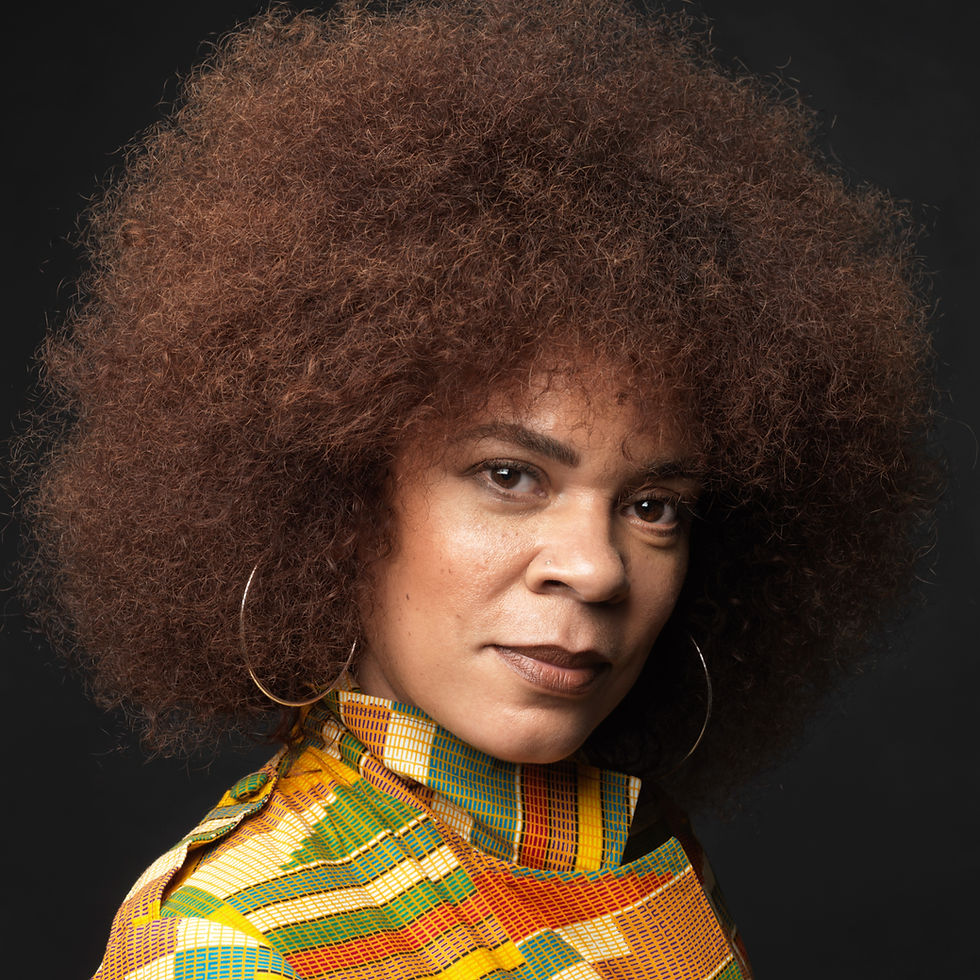
Babs Gons is a Dutch writer, spoken word performer, and host. For decades, she has been a driving force behind numerous poetry stage initiatives. Gons made her debut in 2021 with her poetry collection and has since published several books and won several prizes for her work. She has been presenting her work for years at festivals, in museums, debate centers, on radio and television, and has traveled with her work to South Africa, Sudan, Curaçao, Suriname, Colombia, Italy, Hungary, and Brazil, among other places. Gons was the Poet Laureate of the Netherlands from 2023 until 2025. The selection committee of the Poet Laureate praised Gons as "one of the most appealing poets the Netherlands has right now, with a voice full of fire, burning and warm, both on stage and on paper. She is a poet who knows how to give passionate and committed words to what is going on in this day and age, in a society that she, full of conviction, connects with poetry."
Could you be black for us on Wednesday?
hello
we would like to invite you
onto our stage as a woman
would you like to be black during our event this Wednesday
we have a show and are looking for people like
you
your type
on our show
on our stage
in our magazine
in our debate
a little less feminine please tonight
and we’d like to book you for Saturday
a little less on the dark
a little more on the light
a little more like
the average, normal
for the tone of our show
we’re looking for
a little angrier
more foam at the mouth
and more pointing of fingers
could you be sexier?
could you smile more?
could you
could you
could you give us more global issues
a little #MeToo
a bit more single mom
more absent dad
bad childhood
don’t emphasize it too much
and in between the lines some trauma
we’d like it if you wear a dress
a headscarf, a dash of Badu, soulful
don’t you have some more angry black woman
a little more woke
unapologetic
not too much
just uncomfortable enough for the audience
to snap their fingers
clap
will you bow for us?
we’ll skip you for now
we already have someone
like you
we already have enough
of your type
thank you
maybe another time
we had hoped you’d be a little younger
more feminine
more left-wing
more right-wing
a little whiter, blacker
a little more
a little less
visible
don’t get angry
we’d love to have you on our show
on our stage
in our magazine
in our debate
to talk about that anger of yours
we’re actually very interested
don’t get angry
we’d just love to
you actually fit so well
we’d like to talk
about that anger
please
we would love for you to
don’t get angry
we mean well
Translated by Fannah Palmer
do it anyway
do it anyway
tell yourself
in those moments when you don’t know
what you’re doing it for
why for weeks, months
sometimes even years
you keep chewing on a mouthful of sound
why you’re trying so hard
to translate the images in your mind
to tell stories
that force their way
out through your skin
do it anyway
occasionally whisper into the mirror
when you see how those late nights
the stooping posture
the loneliness
the bright lights and
badly ventilated dressing rooms
leave their traces on your body
on the skin of your face
how time and again you’re faced with the judgment
of anyone whose eyes
keep snagging on what they’re seeing
anyone
who simply feels the need
to make and think something of you
and to share that wholeheartedly
with the rest of the world
do it anyway
even though they’re making fun of your art
cutting down on your work
think you’re a leftist’s fancy
think you should just act normally
do it anyway
tell yourself
whenever you’re tempted to go and do something
with which you’ll be sure you
can pay next month’s rent
and your son can go to college
do it anyway, repeat that to yourself
whenever you realize once again
you will never change the world
with a handful of artfully constructed sentences
not a single war will you settle with them
no heart will not break because of you
you won’t be able to write away
the woman next-door’s loneliness
nor heal a loved one’s rotten disease
what then, for heaven’s sake, is it worth?
do it anyway
even after, you’ve knocked on closed doors
till your knuckles bleed
build your own houses
don’t wait to be invited
throw your own party
do it anyway
get out of bed on those mornings when
exhaustion deadens your hope and your limbs
even when you think the world doesn’t notice you
and isn’t holding its breath
for you and your stories
tell them anyway
just do it
because deep down you know
that this is the only thing allowing you
to live at peace with yourself and the world
Translated by Fannah Palmer
Go back to your own country
go back to your own country
greet yourself at the border
welcome yourself
on your own soil
your country
where the dust of the earth
the heat of the asphalt
the noise of life
come together in your own midriff
go back to your own country
set foot on your own soil
deep within yourself
lay your hand on your capital city
take a long breath
in your suburbs
where the streets
are named after your true heroes
go back and be
your own country
know your own country
always just behind your eyes
tucked away
just below your chest
between your thumb and index finger
never be a foreigner
because all of this is your own country
i’m going back to my own country
set foot on my own lands
full of tales of ancestors
where the spilt blood
brought forth deep-rooted oaks
that hold me upright among the
remnants of plantations
overgrown with thistles and cover-ups
let us go back to our own country
make the soil belong to everyone again
let everything that has been trampled on
grow again upwards to the sun
let us purify the air
with camphor, coconut, lemon
burn sandalwood and sage
listen to the legends
learn to listen to silence once again
under the sequoia, the baobab
the ceiba tree
amidst the noise
link the voices of those who went before us
with the soil
the sky
the rivers
come back to your own country
greet yourself at the border
welcome yourself
on your own lands
always keep your country
in hand’s reach
somewhere just behind your eyes
in the roof of your mouth
even amidst bleak concrete
let your feet dance softly on the earth
make sure there are always
enough herbs growing in you
enough sand under your fingernails
that the magic of the wind
can always find you
that you never forget the language
let the country speak to you
don’t ever forget
that all this
is your own country
know your own country
always just behind your eyes
tucked away
just below your chest
between your thumb and index finger
never be a foreigner
because all this is your own country
Translated by Donald Gardner
If you have never walked in her shoes
if you have never walked in her shoes
never cycled in the dark with your keys between your fingers
an extra-large hoodie over your dress
your high-heels exchanged for sneakers
so you can peddle home as fast as possible through the night
if you have never walked in her shoes
don’t know how exhausting it is to have eyes and ears
over your whole body
the hairs in your neck warning you
like alarm bells
when you need to make a quick getaway
always making a mental calculation,
what time you have to be somewhere,
when you have to leave
and if you’ll get there just in time
not to run in the dark
not via the park
avoiding groups
never losing sight of your drink
if you have never walked in her shoes
don’t know what it’s like to
avoid eye contact, to pretend to be on the phone
to walk with more confidence
to keep a can of hairspray up your sleeve
to keep an eye via shop windows
on who’s following you
making a detour so your pursuer
doesn’t see where you live
only sometimes to face the greatest danger
in your own home
it’s often someone you know
if you have never stood in her shoes
don’t know the feeling of not being able to breathe
because someone suddenly locks a door
a taxi takes an unexpected turn
if you don’t know what it’s like to be in her shoes
don’t know what it feels like
not to be listened to, not to be believed
not to be helped
to start a new day
the following morning
the fresh wounds, the damage
invisible
under your clothes, your skin
getting through the day
with a smile
then don’t ever tell her
what she should do
what she must wear
that she would have to give birth
and how she should behave
how to move
when to speak
how she her body
how she her life
but teach the world to love her
so much she no longer needs to look over her shoulder
so much she can dance when she wants
go where she wants
just let the world start
to love her with all their heart
Translated by Donald Gardner
THE INTERVIEW
This interview was conducted between Babs Gons and Jae Nichelle on April 29, 2026.
Thank you so much for sharing these poems. I really appreciate “Could you be black for us on Wednesday?” Thinking on that subject, what things do you consider before you accept performance or writing opportunities? Has this changed over the years?
With every request, I consider what motivates it. Over the years, these motivations have evolved. Sometimes requests included statements like, “Our organization is too white and too masculine; could you help us change that?” Occasionally, it felt as if genuine change was desired, but often, the push for diversity was driven by a need to maintain funding. At times, I chose to be the person who embodied that change, recognizing that a shifting literary landscape benefits me as well. However, I only embrace such opportunities when they feel sincere, and my contribution as a writer is valued.
But as I said, things have changed a lot over time, at least for me. You also learn to spot insincere requests quickly.
These poems have been translated into English from the original Dutch you wrote them in. How involved do you like to be in the translation process? Have a translator’s choices ever surprised you?
I played a modest role in the translation of my poems, mostly because the translators encouraged my input and collaboration, which I truly appreciated. But as I said, it was modest, both translators are very experienced. I occasionally proposed an alternative word to better reflect the original rhythm and tone of the Dutch poems. Sometimes, the translator asked me to clarify my intended meaning. Translating poetry is always challenging, especially when aiming to preserve both the spirit and rhythm of the original text. When my work was translated into Portuguese and Spanish, I wasn't directly involved—even though I speak those languages, I'm not fluent enough to participate deeply.
In a 2018 interview, you mentioned how far people’s understanding of spoken word has come in the Netherlands since you began Poetry Circle in 2007. What has been most exciting to see happen in your poetry community in recent years?
What excites me most is witnessing how the landscape of poetry and performance poetry has truly blossomed over the last decade. In the past, I always felt the literary world here was quite closed off, with rigid boundaries around what counted as poetry. For instance, written poetry has traditionally been placed at the top of a kind of hierarchy, while other forms—like spoken word or poetry in different languages—were often sidelined, even though poetry has been an oral tradition for ages and ages. Now, I see so many poets breaking open those old ideas by embracing multilingual performances and spoken word, making poetry accessible to much broader audiences with diverse backgrounds. I love the world of poetry to be as colorful and multi-voiced as the communities we live in. Though there is still work to do, the literary scene is becoming more inclusive and inviting.
After many years performing, what was your relationship to publishing when you published your first book in 2021? Was the experience what you expected?
I had almost given up hope of publishing, even though I approached several publishers years before my book was released. So, when I finally got the chance to publish, I didn’t expect much. But now I can say that being published has been incredible—my audience grew dramatically. I was already a busy performer who traveled a lot, but the book took me to even more places. It’s wonderful to have so many people reading my work, and my book continues to be reprinted. There is not a week going by that I don't receive messages from readers, letting me know how much my work means to them. Crazy! End of May, my second poetry book, will be published and I’m looking so much forward to introduce new poems to the world.
What was your favorite moment or project during your tenure as Poet Laureate of the Netherlands?
Oh my, there were so many memorable moments, but one stands out. The final verse of the first poem I wrote as Poet Laureate was engraved at the town hall of a city in the East of the Netherlands. During its unveiling, the mayor publicly and unexpectedly apologized for the city’s involvement in slavery. It was a deeply emotional occasion that moved many people to tears. And then, the moment right afterwards, my words were revealed, immortalized in marble. Yes, that was very beautiful and memorable.
What do you hope emerging writers are paying attention to?
I hope new writers recognize the responsibility that comes with being a writer, stay mindful of the platform and stage they possess, and appreciate those who paved the way before them. They should understand just how powerful words can be. And also, take your writing seriously, but yourself not too much :).
What’s something that relaxes you instantly?
My home, my sanctuary. The afternoon sun on the balcony. Walking, be it through nature or the city; I love walking.
As a poet who has traveled a lot, how do you approach performing for audiences who may not share your same language?
It’s actually quite special—I’ve performed in Dutch worldwide, sometimes with subtitles projected, sometimes accompanied by a live interpreter. These experiences have been truly rewarding. Most recently, during a performance in Sweden with a renowned actress, we collaboratively developed new works based on my poems, wherein I presented them in Dutch, and she integrated the Swedish translation between the lines. Similarly, in Colombia, collaborating with a local actress was incredibly enriching.
What’s wonderful is that when you invite the audience to engage with your poetry beyond just the language, something special occurs. They begin to connect with its rhythm and flow. You can listen to poetry without knowing the language.
How can people support you right now?
Thank you for asking this question. I would be thrilled to have my book translated and published in the United States. So, I'm putting that intention out into the universe. Furthermore, I think poetry makes this world a softer place, so I hope that people read and share poems with each other.
Name another Black woman writer people should know.
Two poets come to mind: Lisette Ma Neza and Danielle Zawadi are two exceptional Afro-Dutch poets who excel in performance. I eagerly anticipate the publication of their works.
###
Torch Literary Arts is a 501(c)3 nonprofit established to publish and promote creative writing by Black women. We publish contemporary writing by experienced and emerging writers alike. Programs include the Wildfire Reading Series, writing workshops, and retreats.