July 2026 Feature: Desiree Cooper
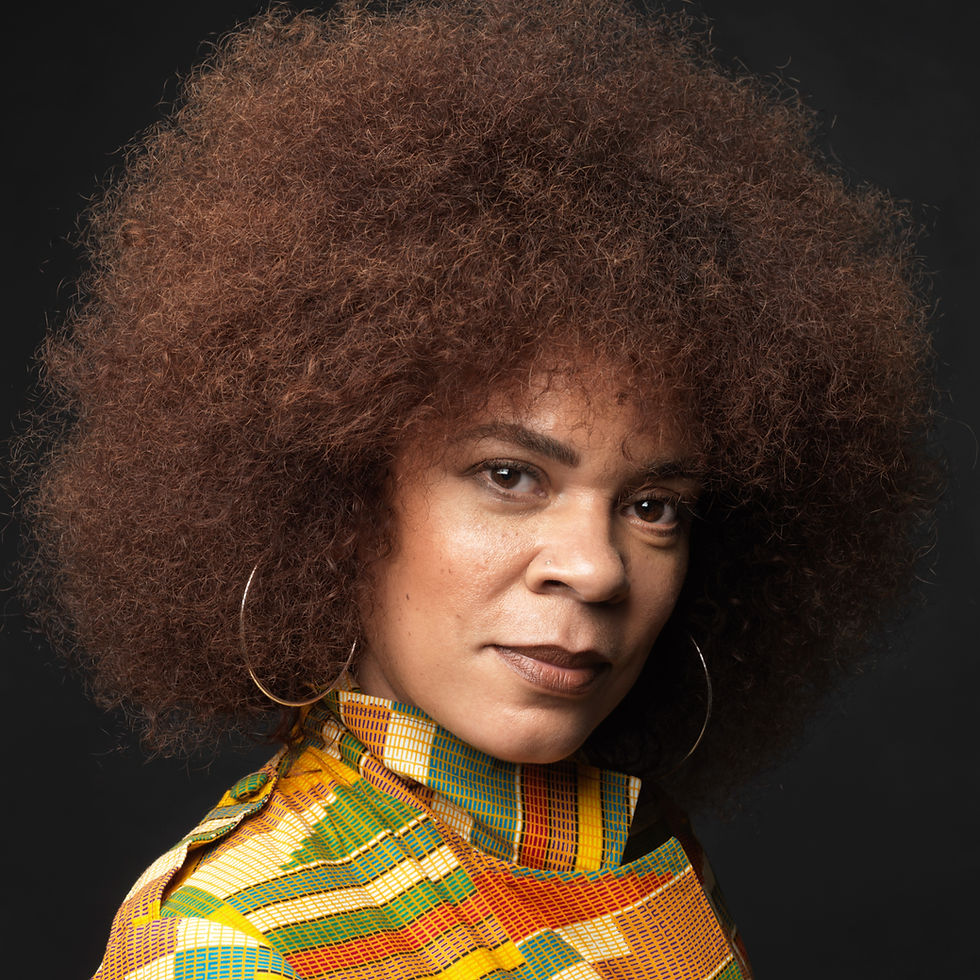
Desiree Cooper is a Pulitzer Prize-nominated columnist, award-winning author, and a member of the Wintergreen Women Writers Collective.

Desiree Cooper is a 2015 Kresge Artist Fellow, former attorney, and Pulitzer Prize-nominated journalist, and editor of the groundbreaking 2026 anthology, Black Summers: Growing up in the Urban Outdoors. Her debut collection of flash fiction, Know the Mother, won numerous awards, including the 2017 Next Generation Indie Book Award. Cooper’s fiction, poetry, and essays have appeared in The New York Times, Oprah Daily, MSNBC Daily, Flash Fiction America 2023, Michigan Quarterly Review, The Rumpus, River Teeth, Best African American Fiction 2010, and noted in The Best American Essays 2019. Cooper’s children’s picture book, Nothing Special, is a 2023 Paterson Prize winner and included on the New York Public Library’s “10 Best Children’s Books of 2022.” Cooper is a founding board member of Cave Canem, a former board member of Furious Flower Poetry Center, a Kimbilio fellow, and a current member of the Wintergreen Women Writers Collective. After spending 30 years in Detroit, she now lives in coastal Virginia where she is raising her three grandchildren.
Hell and High Water
In 1948, the U.S. Supreme Court ruled in Bob-Lo Excursion Co. v. State of Michigan that a Detroit amusement park ferry could not ban African Americans from riding the boat. The little-known case was initiated by 24-year-old Sarah Elizabeth Ray and championed by the NAACP. It was one of many cases that helped pave the way to the seminal 1954 Brown v. Board of Education decision striking down racial segregation in American public schools.
When did Sarah Elizabeth Ray, a skinny, colored girl from Wautachuie, Tennessee, decide to take up the torch of righteousness?
Perhaps it was in July 1945, as the twenty-four-year-old stepped onto the upper deck of the steamer Columbia, which ferried passengers down the Detroit River to a Summerland amusement park. The waves lapped the hull, ready to buoy her on a celebration journey. It was her secretarial school graduation day, and she was headed to Bob-Lo Island, the place of Ferris wheel dreams.
Look at her, a school dropout, now a certified secretary, floating above the city on the top deck of the steamer, along with her twelve white classmates. She marveled at her bird’s-eye view of the world–until she saw the uniformed white men approaching. Her body filled with that familiar dread, but she stood fast. Surely they would see that she was now educated, that white people were her friends, that her polka-dotted dress was brand new from Kresge’s, her shoes were shined up with Vaseline, her demeanor was bright and respectable.
The men insisted that she follow them; the boat was no place for coloreds or zoot-suiters. The magical ferry became an ark of white power. Her classmates silently watched as her Judas teacher said: “She will go quietly.” The very one who’d invited her along–who had deemed her “witty for a nigra”--had tossed her overboard. On the dock, Sarah held her refunded fare, but the worthless coins singed her palm. As the ship set sail, she flung the money into the cold, dark river.
There had to be a moment before that one on Columbia, before she walked straight into the Detroit office of the NAACP to file a complaint. It takes patience to become a controlled burn. She’d kept the old embers warm–like the ones that were lit that day in 1935 when she was waiting for a train in Chattanooga. There she is, standing on the colored end of the platform, her arm looped in the arm of that boy, Frank Ray, the twenty-two-year-old from Jersey who opened her nose for freedom in the North. You can see them grinning hope-drunk as the train chugs into the station; they can’t wait to take their final ride out of that white trash, backwoods town. Sarah smugly hands the purser her ticket to Detroit, where she heard that Negroes walked with their heads up high. Look at her, spitting on the tracks before she and Frank step aboard.
No, these notions blaze slowly, like a tallowed wick. Sarah didn’t light the fuse in that instant she was kicked off the Bob-Lo Boat. Or, even when she was a teenager with a one-way ticket out of bumfuck Tennessee. It had to be that day outside of the five and dime, when her mother tried to make her greet that greasy EmmaJean Lester, a redneck who wasn’t so poor she couldn’t boss niggers around. “You a skinny thing, ain’t ya?” the white lady says, bending over to pinch the skin of the black child’s cheek, which even then stretched taut against her regal bones. “Say ‘yass’m,’ Sarah!” her mother coaches, tugging her arm nervously. The little girl levels her hot gaze, then deliberately pronounces, “Yes, Miz Lester,” just as pretty as you please. Her mother’s eyebrows rise in sync with EmmaJean Lester’s. Both of them know to leave well enough alone; they’d never get a “yass’m” from Sarah Elizabeth. Not now, not ever.
Months before that, the school board noted that there were only two nigger families in all of Hamilton County, Tennessee. That wasn't enough to justify the expense of a school bus to tote them to the shack behind the schoolhouse. If they wanted to come to school, they’d have to walk the five miles there and back. So, at six years old, Sarah walked, her eyes tearing with grit as a bus full of white children rolled past her every morning.
The county finally found a white man to take Sarah to school on his way into town to get slops for his pigs. School was her way up and out, so she clambered onto the back of the truck eagerly. The method of travel never mattered much to Sarah; the only thing that mattered was where she was going. She learned cursive by practice. She learned to calculate in her head. She learned the meaning of words like “dignity'' by being forced to live the opposite.
Wherever that notion started--on the back of a slop truck, outside the five and dime, in the colored car of a northbound train, at the sound of the timer when she realized she was the fastest typist in her class--it finally ignited that summer day on the Detroit River, there on the top deck, when Sarah Elizabeth Ray’s classmates, pink with privilege, did nothing to help her as the steward tossed her from the Bob-Lo Boat.
There was nowhere else for the fire to go. So she laid it upon the river of injustice, stood back, and watched it burn.
THE INTERVIEW
This interview was conducted between Desiree Cooper and Jae Nichelle on March 13, 2026.
It is so wonderful to read “Hell and High Water” and learn about Sarah Elizabeth Ray. Can you take us back to when you first encountered this story and what moved you to do deeper research?
I encountered Sarah Elizabeth Ray’s story when working as a columnist for the Detroit Free Press. A reader told me about the forgotten civil rights pioneer who had integrated an amusement park ferry in 1948. Evidently, she was living alone on the city’s east side. I interviewed Sarah Ray in early 2006 and shined a light on her U.S. Supreme Court win years before Rosa Parks’s infamous bus ride. She passed away at age 88, just months after the article was published. In 2019, filmmaker Aaron Schillinger was researching the Boblo Boats and came across my article about Sarah’s integration fight. He reached out to me and we established the Sarah E. Ray Project to raise awareness about her contributions to civil rights. We held community lectures, engaged school systems, got her inducted into the Michigan Women’s Hall of Fame, and even brought her to the attention of the New York Times. Her obituary is now included in the New York Times’ book, Overlooked, which celebrates “underappreciated people who broke the rules and changed the world.”
This piece was a catalyst for your Black Summers anthology. What was the process of bringing this project to life? What are you most excited about?
Sarah Ray was part of the Great Migration—the era when Black folks fled the terror of the Jim Crow South and profoundly changed America’s cities. I wondered if she were alive today, how would she view the fruits of her battle? The anthology was an attempt to let the children and grandchildren of the Great Migration answer that question. Each contributor considers how race continues to shape their ability simply to enjoy public spaces. Because I had lived in Detroit for almost 30 years and had been a journalist there, I knew many gifted writers (both experienced and new) who I invited into the project. Detroit’s Wayne State University Press immediately embraced the proposal. Detroit artist Senghor Reid gave us permission to use his art on the cover. The result is Black Summers, a completely homegrown effort that took three years to develop and publish.
Despite its central focus on Detroit, the collection reflects the common experiences of African Americans who fled to cities in the North and West to find sanctuary. What excites me most is the prospect of starting conversations among Blacks across the nation about how race continues to impact how they engage with the urban outdoors. I expect there to be as much discussion about racial barriers as there will be about the creative ways our people have insisted upon joy.
What do you miss most about living in Detroit? What has the return to Virginia, your parents' homeplace, given you?
I MISS EVERYTHING ABOUT DETROIT! It’s where I grew into adulthood, raised a family, and developed lifelong friendships. Folks know a lot about the city’s struggles, but they know far less about the artists, food scene, and history that permeates the city. It’s a great town and it has done a lot of work around creating inviting, inclusive outdoor spaces.
I left Detroit ten years ago to care for my aging parents in Virginia. They both have passed, and I’m now raising my grandchildren in the home that my parents prepared for us. At 66, I’m amazed at how fate has given me this opportunity to come full circle. I love Virginia as much as I love Detroit, and being here has taken me inward in profound ways. The slower lifestyle, long summers, ancestral roots, and proximity to the ocean have fed me as a writer. I feel like I’m in the season of “off-loading” – thinking and writing about things that have dwelled inside me for decades.
Your children’s book, Nothing Special, is inspired by your family and showcases that movement between Detroit and Virginia across generations. What literary choices did you make while writing for an audience of children? As someone who writes across many genres, did this project feel like it worked new or different creative muscles?
During the Great Migration, my father, who was born and raised in rural Virginia, enlisted in the military instead of moving North. Despite 20 years of travel in the Air Force, there was never any question that “home” would always be Virginia for us. Even as I carved out a life in Detroit, we journeyed South every summer to maintain our connections. This is a story repeated by countless African Americans in Northern cities, and one that I wanted to honor in Nothing Special.
The children’s book does not speak of the pain of separation that the migrating families experienced, nor of the sacrifices our ancestors made as they sought equal opportunity in the North. Instead, it only speaks to the permanence and value of the “home place,” no matter where we go. We were torn from our families and our land by terror, not by choice. We continue to observe the family reunion as both ritual and relief. Children will see Nothing Special as a multi-generational buddy book. Their parents (including those of other backgrounds who have migrated away from their origins) will recognize the historical underpinnings, and the unbreakable kinship ties that bind.
As a journalist and flash writer, I gravitate to the short form. So, writing a children’s book was not a stretch for me in terms of structure. But children’s books require a close collaboration with the illustrator. In Nothing Special, fabric artist Bec Sloane hand-created each character and everything in the scenes, then photographed the work. It was a stunning experience to watch her bring my father to life again through art. We negotiated countless details, and decided which part of the story would be conveyed by the words, and which would be conveyed by the art. It was an unforgettable experience.
As a founding board member of Cave Canem and a current member of The Wintergreen Women Writers Collective, can you speak to how you see the state of Black literary organizations and institutions today? What are your hopes for the future?
Black writers changed the arc of my life: from the first time I read The Bluest Eye as a child, to breathing the air of poets with Cave Canem, to finding sustenance and sisterhood with Wintergreen. Each time that I was unsure about my worth, hesitant about my voice, or questioning my belonging, Black arms pulled me close and pushed me forward.
The Black writing community continues to play that role in my life (and following their example, I try to play that role for other Black writers). But there’s much more at stake now. Sometimes, I worry that Black literary organizations will not survive the current socio-political climate. I forget that we are a network of necessity, and that we will double down on our commitment to Black voices, no matter what. I’m heartened that our literary organizations are having many joint conversations about strengthening our roots, expanding our missions, and ensuring our long-term viability. The collaboration between Torch Literary Arts and the Wintergreen Women Writers Collective to offer the “Welcome Table Talk” is one powerful example. My hope for the future is that these organizations and the writers they serve will emerge stronger than ever.
Do you have a go-to karaoke song or a song that always gets you in the mood to dance?
Hands down, “Groove is in the Heart,” by Dee-Lite feat. Bootsy Collins
How can people support you right now?
They can support me by supporting Black Summers: Invitations for community readings and college visits, posting about it on social media, including me on podcasts, and suggesting it for book clubs. Toward a longer view, being intentional about supporting Black authors and donating to organizations that sustain Black voices is mission critical.
Name another Black woman writer people should know.
Jean Alicia Elster has been out there for a long time writing great books for young readers. Her latest book, How It Happens, is a YA novel about the women in a Black family that moved from the South to Detroit. It deals with rape and colorism. It’s a great book.
###
Torch Literary Arts is a 501(c)3 nonprofit established to publish and promote creative writing by Black women. We publish contemporary writing by experienced and emerging writers alike. Programs include the Wildfire Reading Series, writing workshops, and retreats. Click here to support Torch Literary Arts.