February Feature: Unoma Azuah
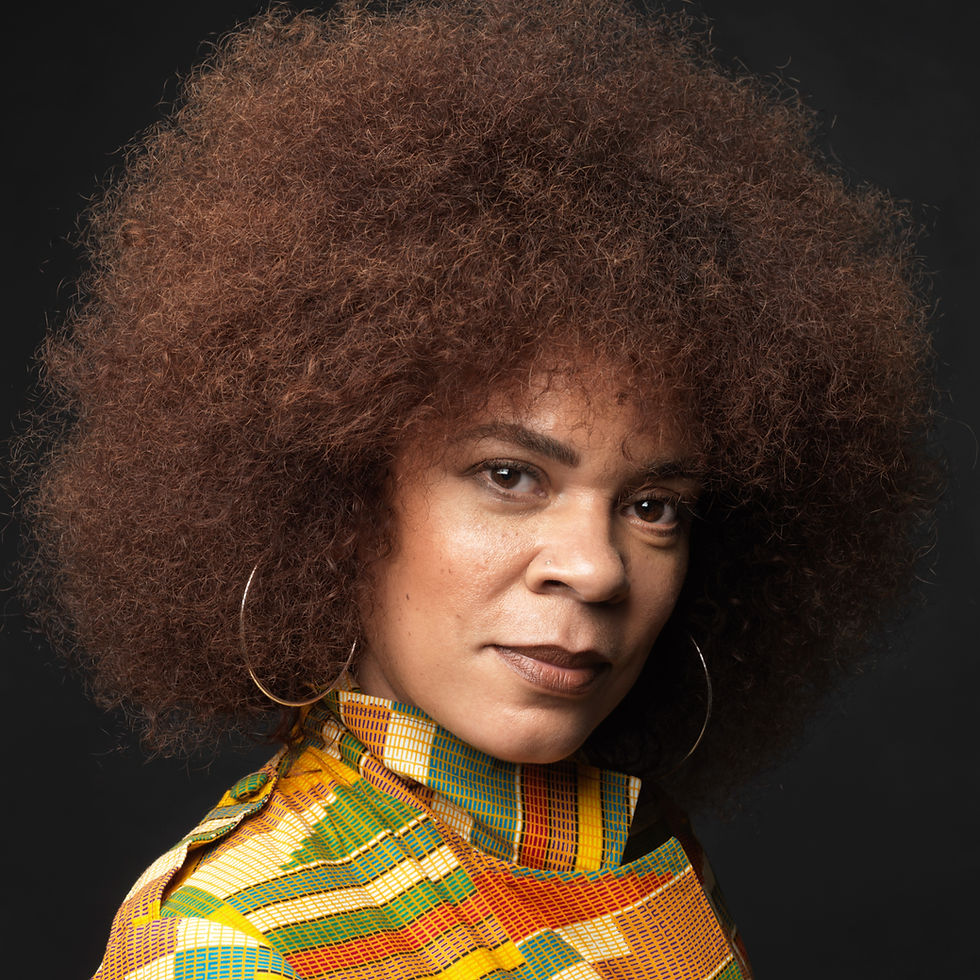
Unoma Azuah is a Nigerian writer and activist whose research and activism focus on LGBT rights and stories in Nigerian literature. She is the international-award-winning author of three books.

Unoma Azuah teaches English at Wiregrass Georgia Tech. Valdosta, GA, USA. In 2011, she was listed as one of the top professors at small private colleges in the United States in Affordable/Private Colleges and Universities in the United States. Additionally, she is recognized by The Journal of Blacks in Higher Education under the topic, "Honors for Four Black Educators." Some of her collaborative works with organizations like the International Gay, Lesbian, and Human Rights Commission (IGLHRC) and PEN America led to reports and book projects like “Nowhere to Turn: Blackmail and Extortion of LGBT People in Sub-Saharan Africa” and “Silenced Voices, Threatened Lives: The Impact of Nigeria’s Anti-LGBTI Law on Freedom of Expression.” Her latest work is entitled, Wedged Between Man and God: Queer West African Women’s stories. Some of her awards include the Aidoo-Snyder award, Urban Spectrum award, Flora Nwapa/ Association of Nigerian Authors award, Leonard Trawick award and the Hellman/Hammett Human Rights award. Her undergraduate degree in English is from the University of Nigeria, Nsukka. She has an MA in English from Cleveland State University, Cleveland, Ohio, and an MFA from Virginia Commonwealth University, Richmond, VA.
Postcards
Western Sahara
A parliament of vultures
surround the carcass of a camel.
Wind-blown men on horses
Cast a side glance at me
The sandstorms on their heels tint the air
Dakar
three faces
the side with buzzing bees
the side where balboa trees dwell
and the side where splashes of sea waves taunt
I was robbed at a place where zinc roofs touched the sun
Cape Town
White height
sparkle
Addicts, black, lingered around trash cans
A woman with bird nests in her eyes smashed her metal bag on my face
Figuring out why
took the length of the street: long
Abuja
for three months
I lived in a hotel with my lover and her band
To help her mount her music monument
The installation came crashing down on us.
London
She held the crown I wanted
She let me touch it
I couldn’t take it
I found love in this town, but lost.
Beijing
She was straight
But I showed her how to bend to Buddha
Our tongues crashed through a worship song
She spoke Mandarin
I spoke Igbo
We swallowed our tongues
They couldn’t save us.
Chicago
The cold drains life
Ice blocks are what I grind with my teeth
I spend a lifetime seeking the sun
I left life in a defrosting gadget
Now, withered wings are far flung
From these heights
I have mounted new wings against the greying sky.
Ontario
Blue blood,
blue hue,
the feel of cotton clouds: they know neither the sizzle of pain fried, nor the burn of bones broken....
Hurricane hallucinations:
Silence crashes through my glass door
drops a seagull at my feet
where broken glasses lay
sea waves gather
the gash on the door
streams in sun beams
slants of light
strangulating
me. traps. me.
the sea rises
birds shrieking
this water laps my face
a dog and a tongue
a gallon gulps
the sea rises
there are birds flapping their wings
Flailing arms
I drop, deeper
my prayers rise
like
floating feathers
yet
Hens hum in the distance.
THE INTERVIEW
This interview was conducted between Unoma Azuah and Jae Nichelle on December 10, 2025.
Thank you for sharing these incredible poems! “Postcards” includes so many different cities. As a frequent traveler, how do you find that your physical location shapes your writing style?
Of course, new locations are new experiences. At such places, my senses are usually heightened, so I try to absorb everything about that location, from sounds to sights, food, temperature, and energies. Like a meal, it’s often fresh and sizzling. There are some instances, though, where the situation can feel sour or strange. For instance, a few years ago, I was at a local market in Qinghai Province, China, and the lady I was buying shawls from was so curious about my skin. I was taken aback. She asked to touch my arm. I guess she wanted to know if the black of my skin was like a soot that could rub off. At first, I was offended. However, her eyes lit up with genuine curiosity. Encounters like this make me keep a record of my experiences, the people, and the places. It’s like taking photographs on trips. In this case, instead of a camera for pictures, I come away with poems or stories. So, yes, my physical location shapes my writing style because new places offer me new occasions to absorb the vigor of people and their idiosyncrasies. Traveling is enriching; it’s a fodder for creativity.
“Hurricane Hallucinations” ends with such an interesting turn. What is your philosophy for writing your endings, whether it’s poetry or fiction?
Endings are very important to me when I write both Fiction or Poetry. Just like in relationships, the way it ends makes it easier for one to either heal or stay traumatized. Good closures in writing are vital. It’s like that lingering reverberation at the end of a great musical score. It leads you home. It completes the pleasure. It’s a climax. Everything else falls into place. It’s also a way for me to connect with my audience- for them to step into my shoes-to feel what I feel- and to know exactly why I feel the way I feel. Therefore, endings make the micro the macro: it’s about focusing on the small scale and then spanning out to the macro, the large scale. Hence, my philosophy of endings is that it’s imperative for my audience see the larger picture when they are done reading that piece of literature.
In a 2017 interview, you said you enjoy poetry the most out of all the genres. Is that still the case? And what are your rituals, if any, for sitting down to write a poem?
That is still the case. Ironically, I write more of fiction and nonfiction these days. Poetry is still that mistress I see sporadically, and I am still discreet about the “affair.” Consequently, for me, poetry is like worshipping at an altar. It’s intense and intermittent. I actually have to wait for the muse to knock me off my butt to write it. As for rituals, I don’t think I have any. I don’t sit down and decide to write poems. It has to hit me like a bolt. A case in point is this: there was a time I was running late for a class I had to teach, but as I drove through rural Georgia at near dusk, I couldn’t resist pulling over to the shoulder of the road just to stare at how the rays of the sun glistened at the tips of leaves on a corn field. I had to get a pen and paper. Incidentally, the energy I soaked in before writing the poem had nothing to do with neither the sun nor the leaves. This approach to writing poems very much goes against the saying, “Writing is 99 percent perspiration and 1 percent inspiration.” Therefore, the opposite is the case for me when it comes to writing poems. With fiction, though, I do have some rituals which start with my carrying the story around my head for weeks before I sit down and jot down major plots. I would usually sit in the evenings or at night, I am a night owl of sorts, creating and hashing out characters for a couple of hours, and returning to it every day or couple of days until the work is done.
Your work, from your acclaimed memoir Embracing My Shadow to your curated anthologies, has platformed lesbian stories, sometimes at great risk to your safety or the safety of others. How do you navigate having both vulnerability and protection when writing from such intimate places?
I navigate both vulnerability and protection by being private about my locations, and I share very little to no information about my projects until they are done. I also find ways to disguise projects that may attract hostility, just like I did with the recent book tour of the Queer West African Women’s stories, Wedged Between Man and God. The unfortunate thing about that very significant event was that we couldn’t share the news in the media as the events were happening. That was heartbreaking because it could have attracted more people to come for “conversations” if I advertised it in the media. Nevertheless, we stayed on the side of caution by inviting only friends and allies, and then shared the news about the events after we completed them and were all safely home. Per antagonism, there have been a couple of instances where people spat at me in public and called me a disgrace. On those occasions, I was lucky have people with me who could serve as security assistants in case hostile situations spiral out of control. Still, it’s not all gloom and doom. A number of queer women, too, have recognized me in public and offered me hugs and handshakes and expressed their gratitude for what I do to make them feel “seen.”
Nigeria’s sociopolitical climate around sexuality has shaped much of your work. How do you see the landscape changing, and what impact has that had on queer storytelling since you began writing?
There has been quite a bit of progress. There are more queer people who are “out” and vocal in their creative and advocacy work, especially the younger generations: millennials and Gen Z. This is very much unlike the 80’s and 90’s when I was an adolescent trying to navigate the rugged terrain of queerness. I felt so alone. There were no role models in that sense, and nothing in Nigerian literature that I could identify with, except for Wole Soyinka’s character, Joe Golder, in his novel, The Interpreters. But then, Joe is not just a “foreigner,” he is also not bestowed with the best fate. In fact, it felt as if Soyinka had a level of disdain for the character. And there was absolutely nothing about lesbians like me. I still remember the outrage that followed my first newspaper article in the 90’s about queer literature. Now, though, things are a bit better, especially when some of us can hide behind the screens of social media, share our stories, push for queer rights, and spread awareness about our lives. Consequently, the storytelling landscape in Nigeria is expanding. We have not gotten where I’d like us to be, though. Nonetheless, we’re building and pushing, one brick at a time.
When you came to the U.S. from Nigeria, what spaces or people did you find solace and support in?
When I arrived in the US over two decades ago, I didn’t have a lot of options for spaces and people I could share a community with apart from my mentor, Leslye Huff, and her spouse, Amina; they gave me a great transition nest. Otherwise, I was mostly on my own. Then again, I was so overwhelmed with trying to settle into a graduate program at Cleveland State University, Ohio, that I barely had time to breathe, let alone seek or find friends. For example, I had to learn how to type, how to use a computer, and how to speak well enough to be understood. I also had to train my ears to understand what my professors and classmates were saying. When I did try to make friends, it was just obvious that most folks I met already had their clique of friends, so trying to be a part of those circles felt like crashing a party. With time though, I made great friends, and we have maintained/sustained that friendship till date.
What’s a small joy that instantly uplifts you during hard times?
The small joys that instantly uplift me during hard times and good times would include reading books, listening to disco and soul music from the 80’s and 90’s, engaging in stimulating conversations, sitting by the sea/ocean watching and listening to waves rise, crash and recede, taking long walks as birds chirp in the distance, laughter and still being able to enjoy delicious Nigerian meals. I also love being present in the moment and enjoying it with a heart of gratitude.
How can people support you right now?
I would appreciate more literary engagements and spaces to share my works. I would also appreciate support for my works, particularly for people who are able to buy my books. Additionally, donations and grant opportunities for the Nigerian LGBTQ+ organizations I work with will go a long way.
Name another Black writer people should know.
A couple of them come to mind: there is Itiola Jones, the author of Blood Mercy, and this book reimagines Cain and Abel as sisters who are in a traumatic relationship. The second writer is Safia Elhillo. Her work is noteworthy for its representation of black Muslim women and the black diaspora in America.
###
Torch Literary Arts is a 501(c)3 nonprofit established to publish and promote creative writing by Black women. We publish contemporary writing by experienced and emerging writers alike. Programs include the Wildfire Reading Series, writing workshops, and retreats. Click here to support Torch Literary Arts.