January 2026 Feature: Fabienne Josaphat
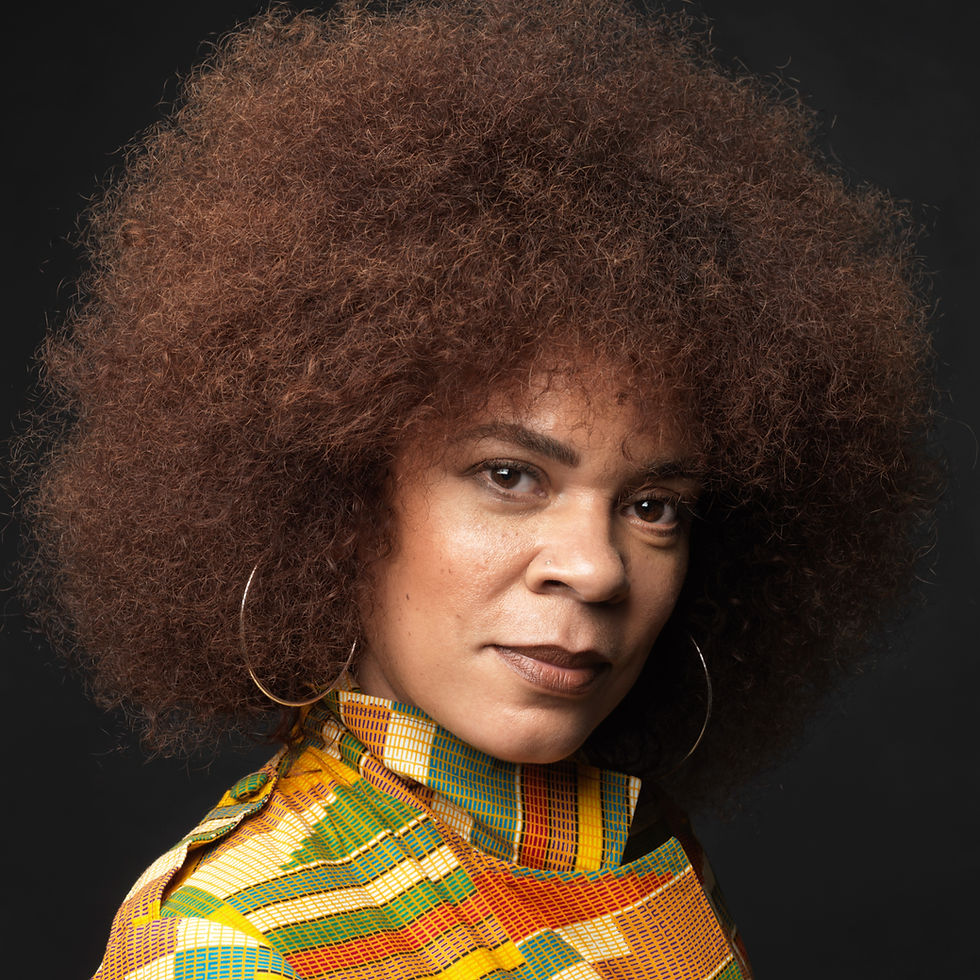
Fabienne Josaphat is the author of the novel Kingdom of No Tomorrow (Algonquin), winner of the 2023 PEN Bellwether Prize for Socially Engaged Fiction.

Fabienne Josaphat is the author of the novel Kingdom of No Tomorrow (Algonquin), winner of the 2023 PEN Bellwether Prize for Socially Engaged Fiction, and longlisted for the 2025 Aspen Words Literary Prize. The New York Times calls it "Muscular, searing . . . a novel for our times." Pulitzer-Prize winner Barbara Kingsolver says, "Kingdom of No Tomorrow will bring the fierce vision of the Black Panthers to new generations of readers, adding some stunning context to the modern Black Lives Matter movement." Of her first novel, Dancing in the Baron’s Shadow, Edwidge Danticat said, “it is an irresistible read about the nature of good and evil, terror and injustice, and ultimately triumph and love.” In addition to fiction, Josaphat writes non-fiction and poetry, as well as screenplays. Her work has been featured in The African American Review, The Washington Post, Teen Vogue, The Master’s Review, The Caribbean Writer, Grist Journal, and more.
Kingdom of No Tomorrow
(an excerpt)
Michael Haywood was in his room, sitting up in bed. He looked frail. Beyond the yellow tint in his eyes and skin, Nettie saw the glow of brown eyes, and a face that would light up any
midnight sky when it wasn’t contorting in pain.
“Sometimes, I feel alright,” he muttered. “I do my chores, I go to school. But sometimes,
I feel like I can’t breathe.”
“Do you feel pain sometimes?” Nettie asked. “In your extremities? Fingers? Toes?”
“Yes ma’am,” the boy said. “It’s how we knew I was sick.”
Nettie sat on the edge of his bed. Mrs. Haywood stood by the door, watching. The room
was dark, too, and Nettie was thankful for the table lamp that glowed enough to let her see what she was writing, checking off boxes. Michael had gotten screened with Dr. Johnson, who had immediately referred him to a hematologist. He was on medication, but lately, it wasn’t helping. Mrs. Haywood lowered her voice as if she didn’t want Michael to hear.
“Since Charles died—my husband—things just became more difficult, financially.
Hematologists are expensive . . .” Nettie could feel her eyes on her, perhaps trying to read her
notes. “Do you know what a blood transfusion goes for at the hospital? You seem so young.”
The orange glow from the table lamp illuminated Nettie’s face, and she felt her cheeks
heat up. Mrs. Haywood was scrutinizing her features, judging her. Would her actual age diminish her authority here? Did this mean she couldn’t work or help in any way? She was prepared to argue for herself, she supposed. She’d had to argue this with her aunt many times. Tante Mado always pleaded that a pretty girl like her should always work her charms to get what she wanted.
“You have the bone structure of a goddess,” Tante Mado would say, holding her face up
in the light to see her angles. “You look like your mother. You could pose for magazines, you
know.”
No, this would not do. This, what she was doing here, tucking her pen and clipboard
away, this had more meaning. If she couldn’t do this, then what point was there in even living?
“How old are you?” Mrs. Haywood asked.
Nettie looked in her eyes and smiled. “Twenty.”
“That’s too young to be a doctor.”
Nettie explained that she wasn’t yet, that this was basic practice.
Nettie and Clia visited families in housing developments, apartments, and mostly projects
in the flats bearing the names of their developers in the inner arteries of Oakland. All the
apartments were the more or less same in layout and in squalor. In one home, Nettie was forced to sit in a corner of the kitchen with her feet up to avoid mice from running over her. She quickly learned the price of poverty here in Oakland, and in America, by observing in each of those visits the lack of nutrition in sick patients’ diets, the water that ran rust red from the tap, the small roaches crawling up the cupboards. How could people be expected to respond to treatment or heal, even, when they didn’t have any real food in their refrigerator? It puzzled her that this was passing as acceptable in a country so rich and plentiful. It felt absurd, as if somehow the poor were not deserving. There was a lie here, a lie between the fabric of the two worlds. It didn’t sit right.
“Still, it gives me hope that you’re here. Sometimes I think about the world out there and how much it is all burning up in brimstone and fire, and sure enough, it’s always the young
people like you who make me believe . . .”
They walked out of Michael’s room and closed the door. The hallway was quiet enough
that Nettie could hear every creak of wooden planks beneath her feet. Michael needed
transfusions, and it enraged her that money was what stood in the way, but she clenched her jaw.
What could she do about that?
“I will talk to Dr. Johnson about it,” Nettie said. “You’re not alone, Mrs. Haywood.”
Violet was sitting on the stairs with her doll between her legs. She was pretending to
brush and comb her hair. Nettie smiled as they walked past her, but again, Violet didn’t return
the smile. No one in this house truly laughed, Nettie thought. It hurt to see such dreariness in
children.
Clia was in the living room working on her report but put her pen down when Nettie
walked in.
“How is he?” Clia asked.
“He is in pain,” Nettie said. “Medicated, but he may need a transfusion.”
Clia went to the window and stared out through the glass panes. The afternoon was
drawing to an end, but the sky was still illuminated. There was no wind, and the palm trees were still, as if etched permanently against the sky.
“We can discuss later,” Clia said, cutting her off. “Someone is here.”
There was a man coming up the driveway on foot. Nettie and Mrs. Haywood had gone to the window to see who it was.
“Can I get the door, Mrs. Haywood? This is the man who came to help.”
Mrs. Haywood hesitated. “Help? How do you mean?”
“Let me introduce you to him,” Clia said. “You can decide for yourself if you want his help or not. I think you will.”
There was a knock at the door. Nettie stood next to Mrs. Haywood, her palms clammy. She cast a glance up the stairs. Violet was still sitting there, her eyes fixed on the entrance. Clia was talking to the visitor, the door open, and they could only hear his voice, a low baritone, smooth, whispering to Clia before she whispered back. “Please come in . . .”
Clia stepped into the living room, a tall figure trailing behind her. Nettie watched him
stand there in a military stance, shoulders squared, feet planted firmly on the ground. Suddenly, everything took a more distinct shape before her eyes. She understood.
The man looked at each of them in the eye. He looked to be no older than twenty-five.
And what distressed her the most was how handsome he was. It wasn’t something in the face,
but it was in the way he carried himself. There was authority in his step and in his voice, and
Nettie studied his clothes. They were impeccable. He was wearing slacks, and a buttoned-up
shirt, and a black bomber jacket in black leather. His shoes were shiny, like his hair, which was
thick and black, like a plume of smoke, and it served as the perfect perch for a magnificent black beret, cocked to the right.
“This here is my comrade, Melvin,” Clia said. “We’re in the same cadre. This is Mrs.
Haywood, this is her house. And this here is my Sista Nettie.”
Sista. This was what had sparked the fire between them. The word sista had lured Nettie
into the basements of the college, and the study halls, in meetings with members of the Student Nonviolent Coordinating Committee and the Congress for Racial Equality. That word had bonded the two over class projects, visits to each other’s homes, and soon Clia was helping Nettie obtain a job in the same clinic where she worked. Clia was a sista to her, but obviously to so many others who knew to show up when she called. When Melvin nodded toward her, Nettie understood that this was who Clia had called. One of those brothas. A militant. Someone who didn’t come here to play games. Melvin reached out and shook Mrs. Haywood’s hand.
He set something down on the sofa, a large black duffel bag Nettie hadn’t noticed before. Clia explained what Mrs. Haywood told them, and then finally Mrs. Haywood cleared her throat and went on about everything. About moving into the house two years ago, about the harassment that ensued. They were the only Black family on the block. They weren’t wanted. The homeowner’s association left her out of meetings and correspondence, at first, but lately, things had escalated to vandalism, threats in her mailbox.
As she talked, Melvin moved around the living room. He peeked through windows,
observed where the projectile had been thrown into her window. He looked out the kitchen
windows, too, ascertaining their surroundings. The more she studied him, the older he seemed to her. She noticed a mustache over his upper lip and the sideburns to match, gracefully hugging his jawline. When he moved past her to go to another window, she smelled his fragrance and it was pure soap and leather.
“I already talked to the police about this,” Mrs. Haywood said, suddenly exhausted.
“They said it was just kids . . .”
Melvin nodded. This time, he relaxed his stance and proceeded to remove what Nettie
hadn’t noticed before. Gloves. It wasn’t cold out there, but she surmised he wore driving gloves, and it added a certain flair to his look.
“At first, it was always at night . . . It’s always people who seem to live here; some of
them are on the neighborhood association board. Now they come in larger numbers, in broad
daylight, in the front of the house, in the back, throwing things into the yard, yelling things at us, like . . .”
Mrs. Haywood stumbled, looking for words. Melvin waited for her to finish, but she suddenly looked into his eyes and they stared at each other quietly until he joined his hands
behind his back.
“Got tired of calling the police after a while,” she said. “They don’t give a damn. Don’t
even come when you call, and when you don’t call they come and tell you to make things easier on yourself, and just move out—”
Melvin stepped away again and this time paused by the piano, looking at the
photographs on the top board. In one large frame, a veiled Mrs. Haywood clung to the arm of a handsome man with a mustache, in a white suit and bowtie, both of them cutting into a white cake. He glanced at Mrs. Haywood over his shoulder.
“You call pigs to your home and they won’t come, because they’re too busy throwing
bricks through your window.”
Mrs. Haywood froze as Melvin moved a small figurine on top of the piano, pushing it
away from the edge as if to protect it from falling.
“It’s just a tactic, is what that is,” he said. “No different from the Klan.”
“You sure know a lot about tactics . . .” Nettie was thinking the same thing as Mrs.
Haywood appraised Melvin. “Where do you come from?”
“Chicago,” Melvin said. “But I volunteered down in Jackson, Miss. Freedom rides.”
Nettie watched Mrs. Haywood breathe in and finally surrender with a sigh. She saw the
woman’s eyes go to the piano and the bench, where the glass had probably shattered, and her daughter probably cried, the sharp notes breaking the peace of this house.
“Well? What do you think we should do?”
“I have to report back to headquarters,” Melvin said. “Let them decide how to—”
“I already did that,” Clia said. “They sent you.”
“I dig it.” He looked at Clia directly in the eyes, visibly unpleased with the interruption.
“All the same, we have rules. We’ll need backup.”
“Why can’t you just sit tight here yourself?” Clia shouted. “And why call for backup
when we’re standing right here?”
Nettie leaned in to Clia, hoping to catch her attention and remind her she didn’t want to
be involved. Especially if there was a potential for violence. But Clia was already balling her
fists.
“I mean, you can trust a woman to handle a gun, can’t you, Brother?”
The way she emphasized “Brother” made Melvin square his shoulders, squint his eyes in
annoyance.
“Are you carrying?” Melvin asked.
“If I did, I wouldn’t call you for backup,” Clia said.
Nettie had never met a woman as bold and strong as Clia.
“I don’t have time for jive.” Melvin sucked his teeth and turned to Mrs. Haywood.
“Where’s your phone, Mrs. Haywood?”
“Why don’t you give me one and see how I handle myself?” Clia said, her head bobbing
defiantly. “Or are you just—”
Something crashed against the window. Mrs. Haywood let out a yelp, but it was the sharp scream of a child that jolted Nettie out of her skin. Violet was still on that step upstairs,
shrieking.
Glass shattered again, the sound this time coming from the back window.
“The hell?” Clia muttered, finding Nettie’s hand and squeezing it.
Mrs. Haywood ran upstairs to the children, her footsteps heavy. She was muttering something inaudible; Nettie thought a prayer. Only Melvin stood there in the shadows of the
living room, unflinching. Outside, there was a revving of engines. Nettie instinctively retreated
with Clia against a wall, her heart pounding. She wanted to plug her ears, make the rumble and the shouting vanish. There were voices rising now above the roar of car engines, clearly shouting intolerable obscenities.
“We told you to get out of our neighborhood! We don’t want your kind around here!”
Clia cursed under her breath, and Nettie held hers. Her eyes were fixed on Melvin, his
silhouette moving in slow motion toward the window. He lifted a corner of the curtain, peeked
outside.
“Watch out!” Mrs. Haywood hollered. They were throwing projectiles at the house now,
screaming and shouting, and Clia’s nails dug into Nettie’s arm, pulling her closer as if to hold
her, protect her. Nettie watched Melvin come away from the window with disconcerting calm.
He went to the couch and unzipped the black duffel bag, reached inside. An electrical surge ran through her as he pulled out the barrel of what she recognized, in the darkness, as a shotgun, fully assembled.
Something flew in through the window and crashed against the photographs on the piano. They fell, more glass shattering, revealing Mrs. Haywood’s younger self grinning next to her husband as they sliced their wedding cake. Nettie’s blood boiled as she saw a large rock dent the shiny surface of the piano. Something inside her snapped. She reached for the rock without a thought, cupped it in her own palm as she launched it like a grenade out the window, hoping to hurt whoever threw it in the first place. Still, she didn’t throw it far out enough.
Melvin pumped the shotgun once. The click sent a chill down Nettie’s spine, but she
suddenly realized the sight of the weapon made her less afraid. Something about its presence, the assurance of its effectiveness, as well as Melvin’s proximity, made her hopeful. He pulled out a handgun from his jacket and walked over to them and looked at Clia, and then Nettie. Then, at Clia again.
Clia quickly took the pistol from him, inspected the chamber. It was fully loaded. She cocked it.
“You watch the back door,” Melvin said. “Any motherfucker comes busting through it,
you shoot’em dead, you dig? Don’t ask questions. Just kill’em.”
“Right on,” Clia nodded, gleeful.
Nettie hadn’t seen this look on her face before, and she wasn’t sure if Clia was happy at
the thought of killing or at the idea that someone, finally, had stepped up to take care of a
problem. Clia inched toward the doorway to the kitchen and stood there at attention. Nettie
watched Melvin again, his hand reaching for the front door handle, without hesitation. Something in the way he moved was captivating, a lack of fear as he opened the door and slid
out into the shadows. Nettie went to the door. Mrs. Haywood was shouting in the background.
She could hear her. “For God’s sake, chile, close that door!” But she needed to see.
The sky was the color of a bruise. Purple and blue, sunlight just an afterthought as night
drew in, and she watched Melvin’s silhouette move down the front steps as if the hailstorm of
bottles and rocks pelting in his direction were nonexistent. She mouthed for him to be careful,
but he couldn’t hear her. He stopped halfway down the driveway. She waited for him to say
something. Anything. Instead, Melvin raised his weapon at hip level. There was no way to see
very well in the dark, but that didn’t matter. She knew there was no need to aim. There was a car standing in front of the gate, engine revving, and she knew what he needed to do. And he did.
The detonation was more of an explosion. It tore through the night like thunder, and
Nettie’s first instinct was to cover her ears. But she stood still, eyes glazed over. For a moment, she wasn’t here in Mrs. Haywood’s house, but in Haiti. Home. Back outside, where the dust rose and the saline smell of the surrounding marshes clung to the air, and her father’s silhouette stood beside her, also pulling the trigger to demonstrate self-defense.
The screaming brought her back to the present. Voices shouted in the dark. Melvin’s
silhouette moved forward quickly, stealthily. He pointed the weapon at the sky this time and
fired another round, and another, until all Nettie could see was the faint plumes of gunpowder
smoking the air and lights shutting off at neighbors’ windows. The voices that had been yelling were now shouting differently.
“Shit! Go! Go! They got guns!”
Then, there was a rendering of metal and the car took off in an awful sound, tires screeching, its blown off bumper scraping the asphalt. In the surrounding neighborhood, there was screaming, and dogs barked furiously. The neighbor’s dog ran to the fence, just yards away from Melvin, growling. Melvin jumped, and on instinct, he pointed his weapon toward the dog. Not the dog! What did dogs know, other than to bark? The thing hadn’t hurt anyone. She thought Melvin would shoot and she braced herself but she heard nothing. Not a sound but the barking and growling. Melvin was standing just a foot away from her now on the front steps, staring at her. Nettie dropped her hands and felt her face burn.
Melvin moved closer into the porch light. She saw a thin layer of sweat on his brow. She
caught her breath as he looked in her eyes. They stood there for a brief instant, and she thought he would ask if she was okay, but he didn’t. Instead, he inched even closer to her until she picked up the spicy scent of sweat on him, adrenaline rushing from his pores, and she knew he wanted to get back inside. So, she let him in, and he closed the door behind them.
Excerpted from KINGDOM OF NO TOMORROW by Fabienne Josaphat. Used by permission of Algonquin Books, a division of Hachette Book Group.
THE INTERVIEW This interview was conducted between Fabienne Josaphat and Jae Nichelle on December 26, 2025.
Thank you for sharing this thrilling excerpt of Kingdom of No Tomorrow. When you began developing the idea for this novel, what was the first thing you knew about your main character, Nettie?
I knew Nettie was a survivor of trauma, but she wasn’t defined by it enough to let it stop her. I knew she was going to grow. In my mind, this was a coming-of-age story, even if everything happens quickly in the span of two years, more or less. A lot can happen within that time to change a person, and I knew she was going to be the brave, daring woman I could never be.
What is your definition of literary success? How has it changed over the years as you’ve published more and received some incredible awards?
I think success traditionally is measured by the accolades and awards and reviews an author receives, so it’s nice to be acknowledged in that way. But to me, especially with this novel, the definition of success is the conversations it sparks, the passion it ignites, especially in the younger generation, and the number of people who are burning with questions about this period. That’s what changed over the years for me, the need to share and educate with the purpose of awakening the reader to more than just an entertaining story, but to the very core of why I tell the story. It’s like the Black Panther Party slogan said, “Educate to Liberate.” I see my writing leaning into education in some aspects, and this to me is also the measure of my literary success.
In your Pen Ten Interview, you said you love how fiction “forces the reader to feel.” What books have made you feel in the past few months?
I think of a lovely novel that surprised me, The Death of Comrade President by Alain Mabanckou. It made me feel delight and amusement and despair all at once, which was new to me. I didn’t know I could experience all this at the same time. Plus, it took me into unknown territory: Congo-Brazzavile in 1970s, so I was able to navigate nostalgia and tap into the pride and the fear of the moment as the characters experience political and social upheaval. Percival Everett’s James also made me feel like I was there, on the plantation, on the river, running for my life, running toward my family, and experiencing all the perils and risks of an enslaved character in the South.
I would love to hear more about your screenwriting! What first drew you to this mode of storytelling, and what has your journey been like with your scripts?
This started out in college during my undergrad. I took a creative writing class where we had to learn to write screenplays, and I was so taken by the process that I wrote a spec script for a popular TV Show just as a test. And I did well enough that my professor noticed. Then, later on, my first novel started as a screenplay – it was my way of telling the story in a fast-paced, cinematic way, and I realized that could be the bones of a novel. Screenplays and treatments are fun for me; I find them thrilling! I’d love to see myself write more screenplays.
What led you to start your Substack newsletter of craft lessons and advice for writers? What’s a craft topic you could talk about for hours?
The Substack is a weird mix of everything, really. It’s a bit of craft, a bit of storytelling, a bit of deep thinking. I do like to share craft and advice, though, because I realize it’s why people take the time to read an online newsletter: they want to know what’s on your mind, what you’ve been working on, and they want you to bring them value, teach them, or tell them something surprising. So craft is that value for me. And I could talk about plot forever. It’s the least explored element of fiction; it’s not at all what people usually think it is, and it gives me joy to help others make that distinction between story and plot.
As a creative writing instructor and mentor, do you find that working with emerging writers influences your own creative process?
That has varied. Some of my mentees and students take writing very seriously, almost like it’s a mechanical task that has to be planned out down to the exact number of days or hours spent on a subject. I have learned from them to give myself more permission to be creative and less rigid. And then there are students and mentees who approach writing almost as a spiritual journey, and from them I’ve learned to open myself up spiritually as well. It’s been a fascinating experience in that way: teaching and mentoring end up being a mutual growth journey.
What are you looking forward to? Either personally or professionally, something small or something big!
At the moment, I’m looking forward to finishing the draft of my next book - a sequel to Kingdom of No Tomorrow. I’d like to get to the finish line so that I can jump into the next project.
How can people support you right now?
I appreciate reviews after my readers are done reading. Writers need those. The second thing writers like me need is time and space to write (writer residencies or retreats are ideal). And of course, it helps to grow a writer’s following – I write on Substack, and growing my readership is something I’m working on.
Name another Black woman writer people should know.
One of my literary heroes is the illustrious Maryse Condé from Guadeloupe, who left us last year. Her narrative voice and her body of work, centering Black voices and Black women like her seminal novel I, Tituba, Black Witch of Salem, should be required reading. And because I feel she should be or already is well known, I’ll throw in another: Yanick Lahens, the award-winning Haitian author who is also translated into English. We should all read her and let her prose transform us.
###
Torch Literary Arts is a 501(c)3 nonprofit established to publish and promote creative writing by Black women. We publish contemporary writing by experienced and emerging writers alike. Programs include the Wildfire Reading Series, writing workshops, and retreats. Click here to support Torch Literary Arts.